Decisive · Sixties Classic & Psych
The Beatles
Liverpool band, 1960–1970. From Hamburg and Cavern live shows through Parlophone singles and the US breakthrough, then toward the Abbey Road studio.

Landmark
I Want to Hold Your Hand · 1963
Capitol US single; Billboard Hot 100 #1 in February 1964. The same month, The Beatles first appeared on the Ed Sullivan Show.
Opened
In the mid-to-late 1960s, The Beatles put songwriting, arrangement, and multitrack recording into one creative process; the studio became part of the finished work.
01 / 09
Core sound
Early Beatles sound rested on two guitars, bass, drums, and vocal harmony. Songs were usually short and direct, with clear verses and choruses. Later the same four-piece remained the core, but recording methods changed. Tape edits, varispeed, sitar, orchestra, and longer song forms entered the work. The shift was mainly in writing, arranging, and recording—not in who was in the band.
02 / 09
Hamburg, Cavern, Epstein
Long Hamburg residencies gave the early Beatles heavy live experience and a more stable stage lineup. After Stuart Sutcliffe stayed in Hamburg, the others returned to Liverpool and kept playing the Cavern Club. Record-shop owner Brian Epstein then became their manager and pushed a Parlophone deal in 1962. That year Pete Best left; Ringo Starr took over on drums.
03 / 09
From five to four
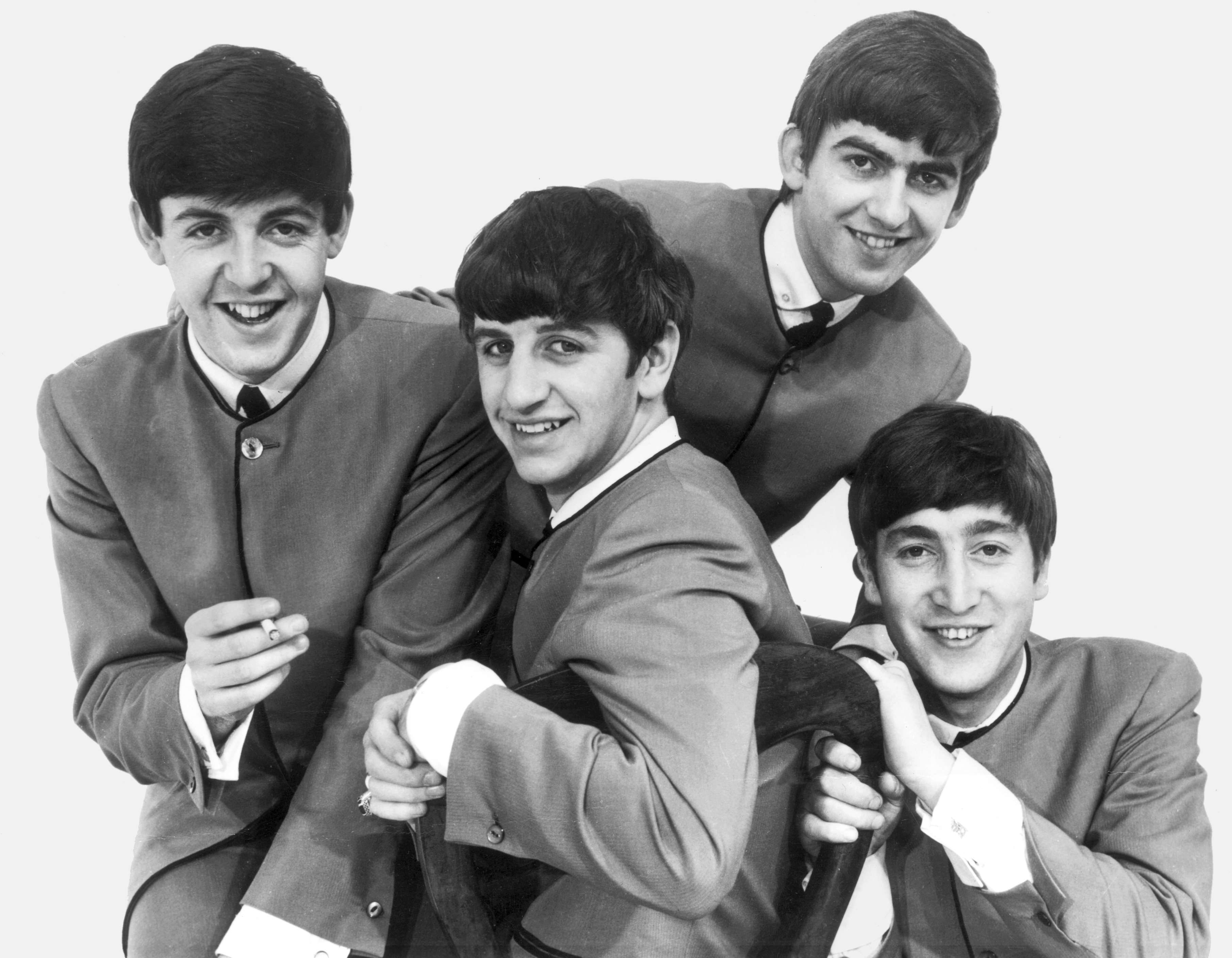
In 1960–62, besides Lennon, McCartney, and Harrison, the band also included bassist Stuart Sutcliffe and drummer Pete Best. From August 1962 the recording lineup stayed John Lennon, Paul McCartney, George Harrison, and Ringo Starr through the band’s final phase. Early hits were written mainly by Lennon and McCartney; later, Harrison’s share of album tracks grew.
04 / 09
I Want to Hold Your Hand and Ed Sullivan
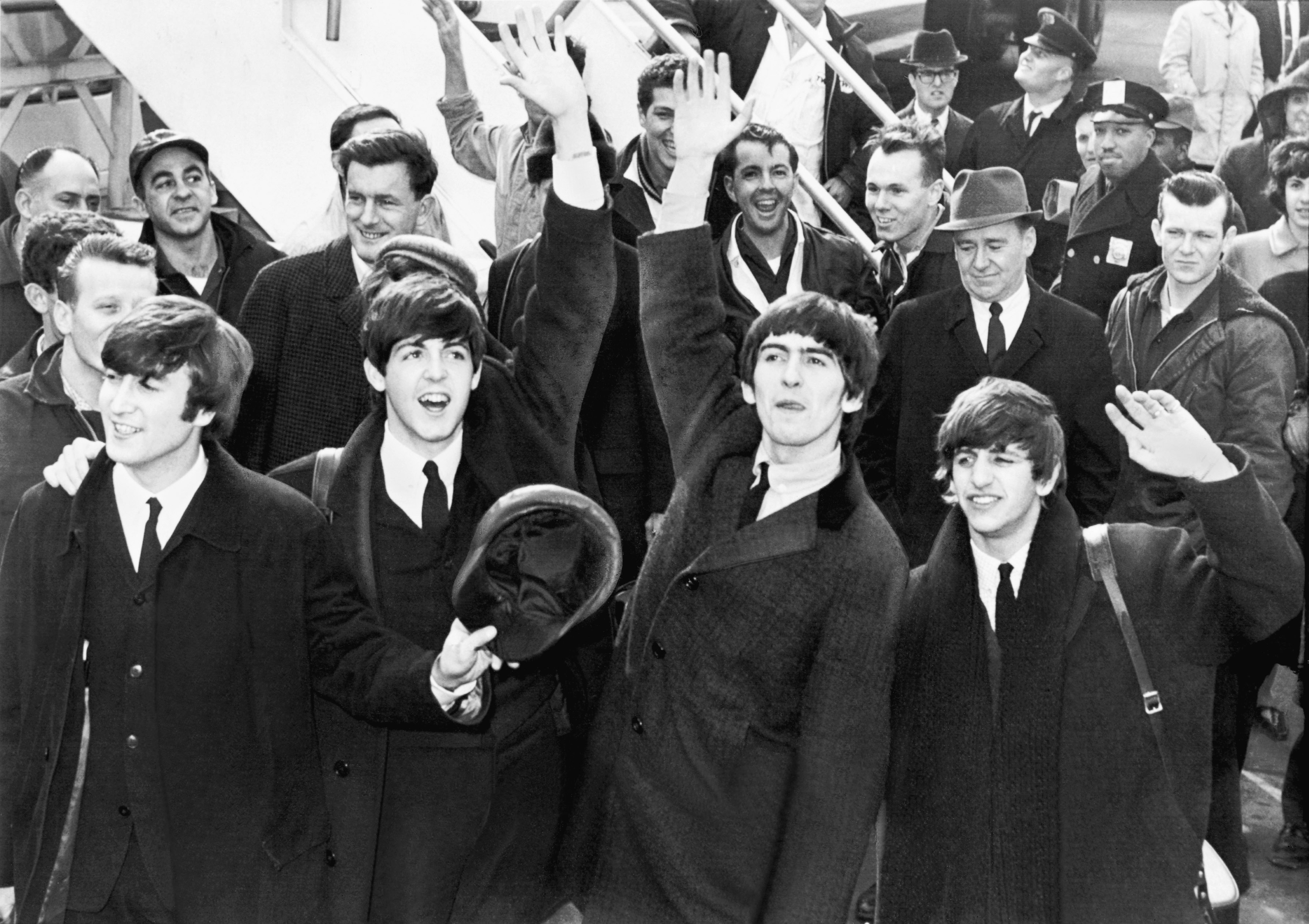
I Want to Hold Your Hand was released in Britain in late 1963 and became a Capitol US single that December. On 1 February 1964 it reached Billboard Hot 100 #1. Eight days later The Beatles first appeared on the Ed Sullivan Show, to an audience of about 73 million. By 4 April 1964, four of the Hot 100 top five were Beatles songs. Twin lead vocals, clear choruses, and sharp rhythm made these songs well suited to singles and radio.
05 / 09
Shared facts with Beach Boys and Stones
The Beach Boys’ Pet Sounds (1966) is another major studio album finished after Rubber Soul. George Martin later linked Beach Boys recording methods with the making of Sgt. Pepper. In 1968 in Rishikesh, a photo of John Lennon with Beach Boys’ Mike Love survives from the period when the Beatles were working on White Album material. Lennon–McCartney also wrote I Wanna Be Your Man for the Rolling Stones. Both bands covered Chuck Berry early on.
06 / 09
Abbey Road studio years
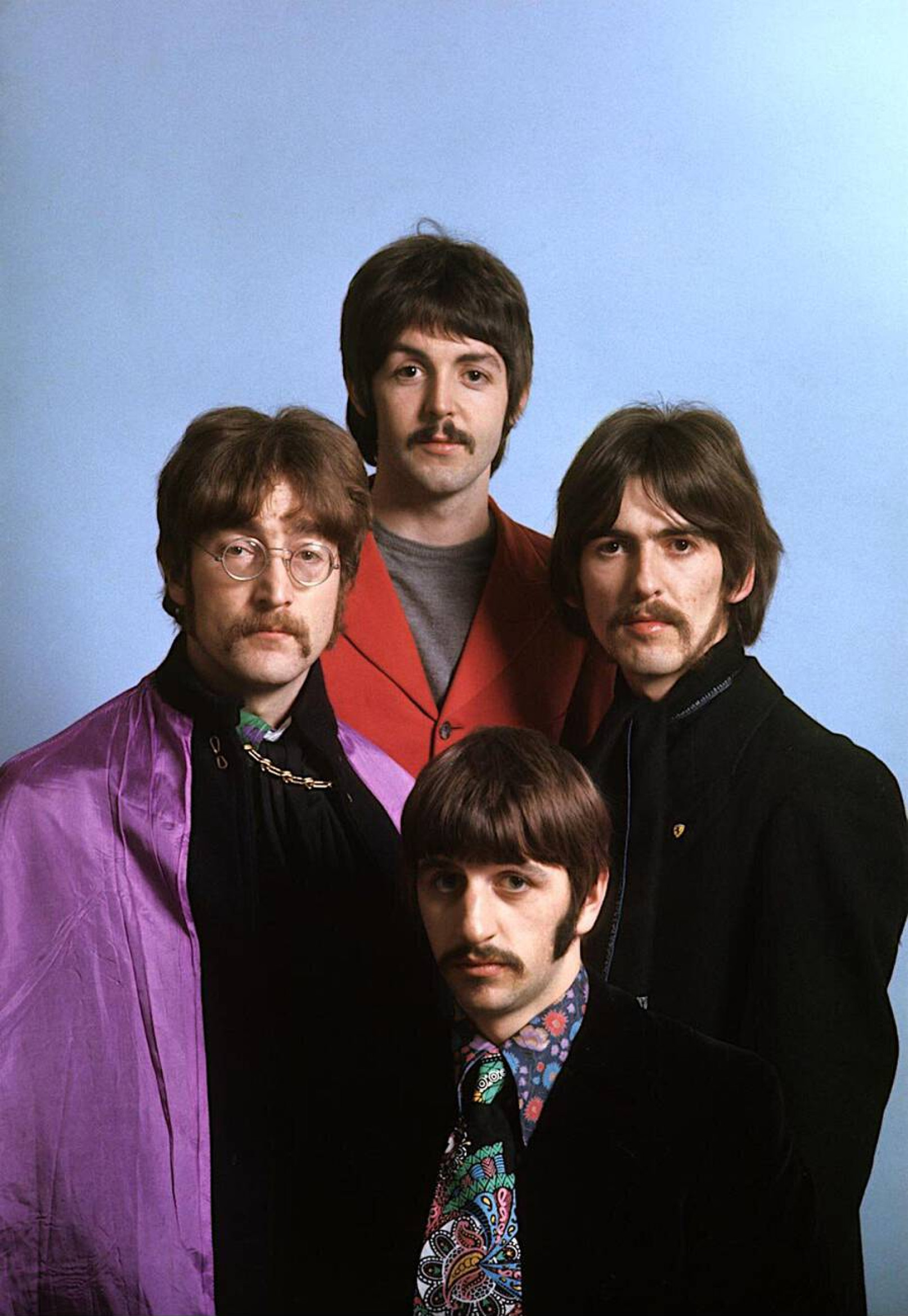
From Revolver (1966) on, Abbey Road’s recording conditions and methods became a large part of how Beatles sound changed. Four-track, eight-track, multitrack overdubs, tape loops, and varispeed were used more and more often. Tomorrow Never Knows is a clear studio piece from this period. Sgt. Pepper (1967) went further in joining recording, arrangement, and album structure—including Lucy in the Sky with Diamonds and A Day in the Life. After touring stopped in 1966, more time went into the studio. Strawberry Fields Forever / Penny Lane and Magical Mystery Tour continued that direction.
07 / 09
White Album to Abbey Road
The Beatles (1968), usually called the White Album, includes Back in the U.S.S.R., Dear Prudence, Blackbird, and While My Guitar Gently Weeps, and further raised each member’s share of independent writing. The same year’s Hey Jude runs near seven minutes, with Revolution on the B-side. Let It Be sessions were difficult; Starr briefly left during the White Album period, and Harrison also left during Let It Be production. Abbey Road was recorded after Let It Be but released before it. It includes Come Together, Something, Here Comes the Sun, and McCartney’s medley. The 1969 Apple rooftop show was the Beatles’ last public concert.
08 / 09
Writing and album practice
Lennon–McCartney harmony, middle-eight bridges, and album sequencing became material later rock writers studied and reused. EMI-era overdubs, tape edits, and non-standard instrument colors also entered later psychedelic rock, progressive rock, and indie production.
09 / 09
On process
There are many Beatles interviews, documentaries, and tape archives. What usually matters more than a summary judgment is the concrete process: who wrote which section, who played what, and how a song moved from demo to final take. That is also why the later records repay close listening: changes in the same song often happen in the studio.
01 / 09
Core sound
Liverpool band, 1960–1970. From Hamburg and Cavern live shows through Parlophone singles and the US breakthrough, then toward the Abbey Road studio.
Listen
Lineup versions
Hamburg five
1960–1962
Hamburg residencies. Sutcliffe stayed in Hamburg; Best left in 1962 when Ringo Starr joined.
- John LennonVocals, Guitar
- Paul McCartneyVocals, Guitar
- George HarrisonGuitar, Vocals
- Stuart SutcliffeBass
- Pete BestDrums
Classic four
Peak1962–1970
Four-piece from August 1962 through the 1970 split; recording lineup from Please Please Me to Let It Be / Abbey Road.
- John LennonVocals, Guitar
- Paul McCartneyVocals, Bass
- George HarrisonGuitar, Vocals
- Ringo StarrDrums, Vocals
Quotes
“We're more popular than Jesus now.”
— John Lennon, 1966 · Evening Standard interview excerpt
“When they came along, the whole of America just became one letter — B — for The Beatles.”
— Dave Grohl, 1991 · On The Beatles · book interview excerpt
“They opened the curtains, put on a brilliant show, then closed the curtains themselves.”
— Krist Novoselic, 1991 · On The Beatles · book interview excerpt
Scenes
| Year | Track | On stage | Tags |
|---|---|---|---|
| 1963 | I Want to Hold Your HandCapitol US single; Billboard Hot 100 #1 on 1 February 1964. Eight days later, first Ed Sullivan Show appearance reached about 73 million viewers. By 4 April 1964, four of the Hot 100 top five were Beatles songs. | John Lennon, Paul McCartney, George Harrison, Ringo Starr | |
| 1967 | A Day in the LifeFrom Sgt. Pepper. Lennon and McCartney sections join via orchestral build and a sustained final piano chord. George Martin later linked Beach Boys studio work to this period; Pet Sounds had already followed Rubber Soul. | John Lennon, Paul McCartney, George Harrison, Ringo Starr | |
| 1968 | While My Guitar Gently WeepsHarrison song on the White Album; Eric Clapton on lead guitar. Around the 1968 Rishikesh period, Lennon was photographed with Beach Boys’ Mike Love. | John Lennon, Paul McCartney, George Harrison, Ringo Starr | |
| 1969 | Come TogetherAbbey Road opener. Abbey Road (1969) was recorded after Let It Be sessions but released first; includes Harrison’s Something and Here Comes the Sun. | John Lennon, Paul McCartney, George Harrison, Ringo Starr |