Decisive · Hard Rock, Prog & Early Metal
Black Sabbath
Birmingham four-piece from Polka Tulk / Earth to Black Sabbath. The 1970 debut through Sabbath Bloody Sabbath set down-tuned riffs and bleak lyric frames that later metal catalogs still cite; Heaven and Hell (1980) with Ronnie James Dio (ex-Rainbow) restarted the band after Ozzy left.

Landmark
Black Sabbath · 1970
Tritone opening; early metal reference track from the UK Top 10 debut.
Opened
Heaviness from interval, tempo, and lyric frame—not volume alone. Dio and Purple crossovers keep the later catalog tied to Rainbow and Deep Purple.
01 / 06
Early albums as a metal standard
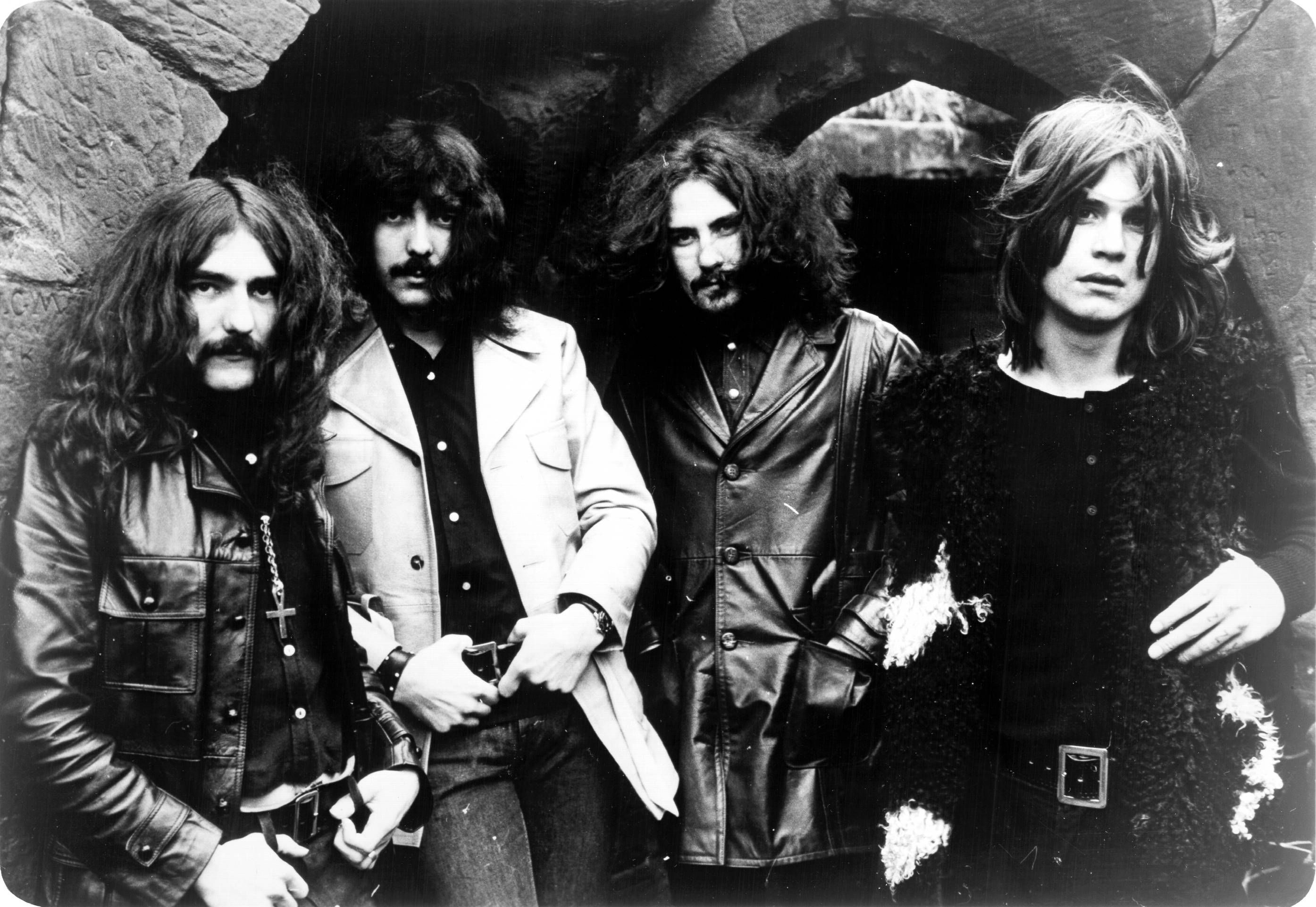
The first six studio albums—especially Black Sabbath through Sabbath Bloody Sabbath—fixed down-tuned riffs, slow-to-mid tempos, and lyric frames about war, dread, and occult imagery. Osbourne’s harmonica on The Wizard, the quiet Planet Caravan on Paranoid, and Rick Wakeman’s keys on Sabbath Bloody Sabbath show range beyond one tempo. Ward and Butler’s jazz-leaning rhythmic ideas sit under Iommi’s riff writing.
02 / 06
Ozzy years: Earth to Never Say Die!
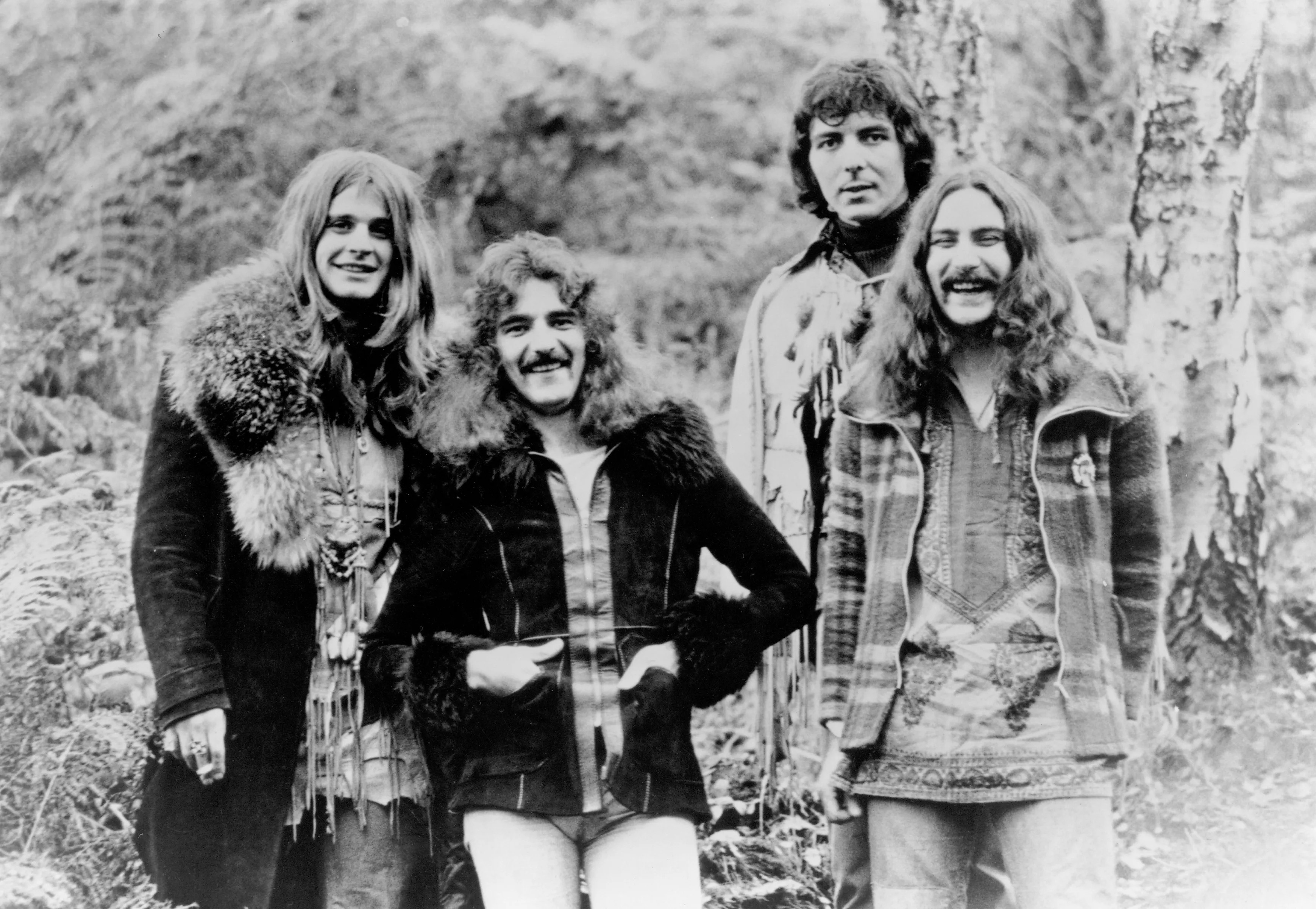
After European dates as Earth, the debut Black Sabbath (1970) hit the UK Top 10. Paranoid (1970), Master of Reality (1971), Vol. 4 (1972), and Sabbath Bloody Sabbath (1973) followed as gold, later platinum, sellers. Sabotage (1975) still works; Technical Ecstasy and Never Say Die! mark the fraying end of the Osbourne studio run before the 1979 split.
03 / 06
Dio from Rainbow; Heaven and Hell
In 1979 Butler briefly left; Rainbow bassist Craig Gruber filled in. Ronnie James Dio left Rainbow for Sabbath vocals. Heaven and Hell (1980) and Mob Rules (1981) restored commercial and critical weight. Ward’s drinking forced Appice onto the Mob Rules tour. Tension peaked around Live Evil (1983); Dio and Appice left to form Dio. Shared personnel with Rainbow (Dio, Gruber, later Powell and Rondinelli) is a clear cross-band thread.
04 / 06
Gillan, Hughes, and the Stonehenge tour
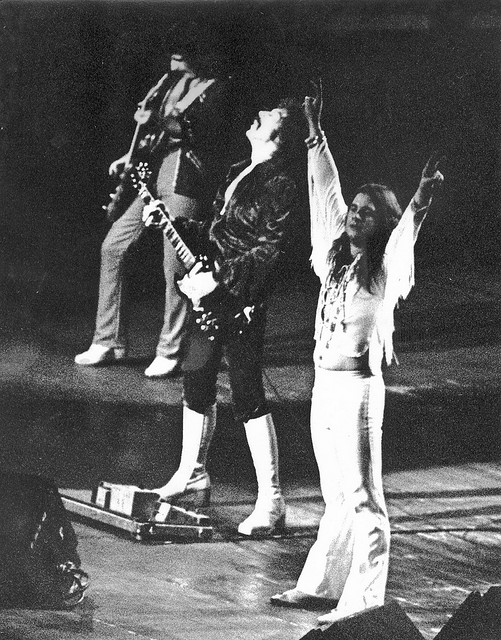
Born Again (1983) pairs Iommi and Butler with Ian Gillan from Deep Purple. Ward quit again when the oversized Stonehenge set went up; Bev Bevan (Electric Light Orchestra) replaced him on that tour. Seventh Star (1986) is often read as an Iommi solo record issued under the Sabbath name, with Glenn Hughes (also ex–Deep Purple) on vocals. Live Aid 1985 briefly reunited Osbourne, Iommi, Butler, and Ward.
05 / 06
Paranoid
Faster riff and shorter runtime than the title track Black Sabbath, still heavy and down-tuned. UK chart peak for the album; the single length fits radio while keeping the early Sabbath guitar tone.
06 / 06
Martin years, reunions, Heaven & Hell
Tony Martin fronted The Eternal Idol (1987), Headless Cross (1989), and TYR (1990) with Nicholls, Powell, and Iommi. Dehumanizer (1992) briefly reunited Dio, Butler, and Appice; Rob Halford (Judas Priest) covered some live dates after Dio left. Cross Purposes (1994) used Bobby Rondinelli (ex-Rainbow). Forbidden (1995) closed the mid-1990s contract run. Classic-lineup Reunion (1998) and Ozzfest dates followed; Iommi and Butler later worked with Dio and Appice as Heaven & Hell until Dio’s death in 2010.
01 / 06
Early albums as a metal standard
Birmingham four-piece from Polka Tulk / Earth to Black Sabbath. The 1970 debut through Sabbath Bloody Sabbath set down-tuned riffs and bleak lyric frames that later metal catalogs still cite; Heaven and Hell (1980) with Ronnie James Dio (ex-Rainbow) restarted the band after Ozzy left.
Listen
Lineup versions
Ozzy era (founding)
Peak1968–1979
Polka Tulk / Earth → Black Sabbath. Debut through Never Say Die!; Paranoid-era peak.
- Ozzy OsbourneVocals
- Tony IommiGuitar
- Geezer ButlerBass
- Bill WardDrums
Dio era
1979–1982
Dio from Rainbow. Heaven and Hell / Mob Rules; Appice after Ward leaves.
- Ronnie James DioVocals
- Tony IommiGuitar
- Geezer ButlerBass
- Bill Ward / Vinny AppiceDrums
- Geoff NichollsKeyboards
Gillan / Born Again
1983–1984
Ian Gillan from Deep Purple. Stonehenge tour stage; Bevan (ELO) on drums for part of the run.
- Ian GillanVocals
- Tony IommiGuitar
- Geezer ButlerBass
- Bill Ward / Bev BevanDrums
Tony Martin years
1987–1991; 1993–1997
Eternal Idol / Headless Cross / TYR; Powell and Rondinelli both ex-Rainbow.
- Tony MartinVocals
- Tony IommiGuitar
- Geoff NichollsKeyboards
- Cozy Powell / Bobby RondinelliDrums
Quotes
“We knew we had something different.”
— Tony Iommi, 2000 · Interview excerpt
“The tritone was the devil's interval. We just made it a riff.”
— Geezer Butler, 1992 · Press interview excerpt
Scenes
| Year | Track | On stage | Tags |
|---|---|---|---|
| 1970 | Black SabbathTitle track from the 1970 debut (UK Top 10). Tritone riff and slow tempo; early metal reference track. | Ozzy Osbourne, Tony Iommi, Geezer Butler, Bill Ward | |
| 1970 | ParanoidUK #1 album Paranoid; short radio-length single. Same LP includes Planet Caravan and War Pigs. | Ozzy Osbourne, Tony Iommi, Geezer Butler, Bill Ward | |
| 1980 | Heaven and HellDio (ex-Rainbow) era; after Ozzy’s 1979 exit and a brief Craig Gruber bass stint. Proves the band still worked without the founding singer. | Ronnie James Dio, Tony Iommi, Geezer Butler, Bill Ward | |
| 1983 | Born AgainIan Gillan (ex–Deep Purple) on vocals. Tour used the oversized Stonehenge stage set often linked to Spinal Tap’s mockumentary gag. | Ian Gillan, Tony Iommi, Geezer Butler, Bill Ward |