Decisive · Hard Rock, Prog & Early Metal
Wings
Paul McCartney’s 1971–81 band after the Beatles. Band on the Run (1973) reached US/UK #1 and remains the main Wings citation for stadium and pop songwriting under a new name.

Landmark
Band on the Run · 1973
Multi-section pop-rock title track; US/UK #1 album.
Opened
Post-Beatles McCartney band; hit singles with suite-length ambition on key tracks.
01 / 06
After the Beatles
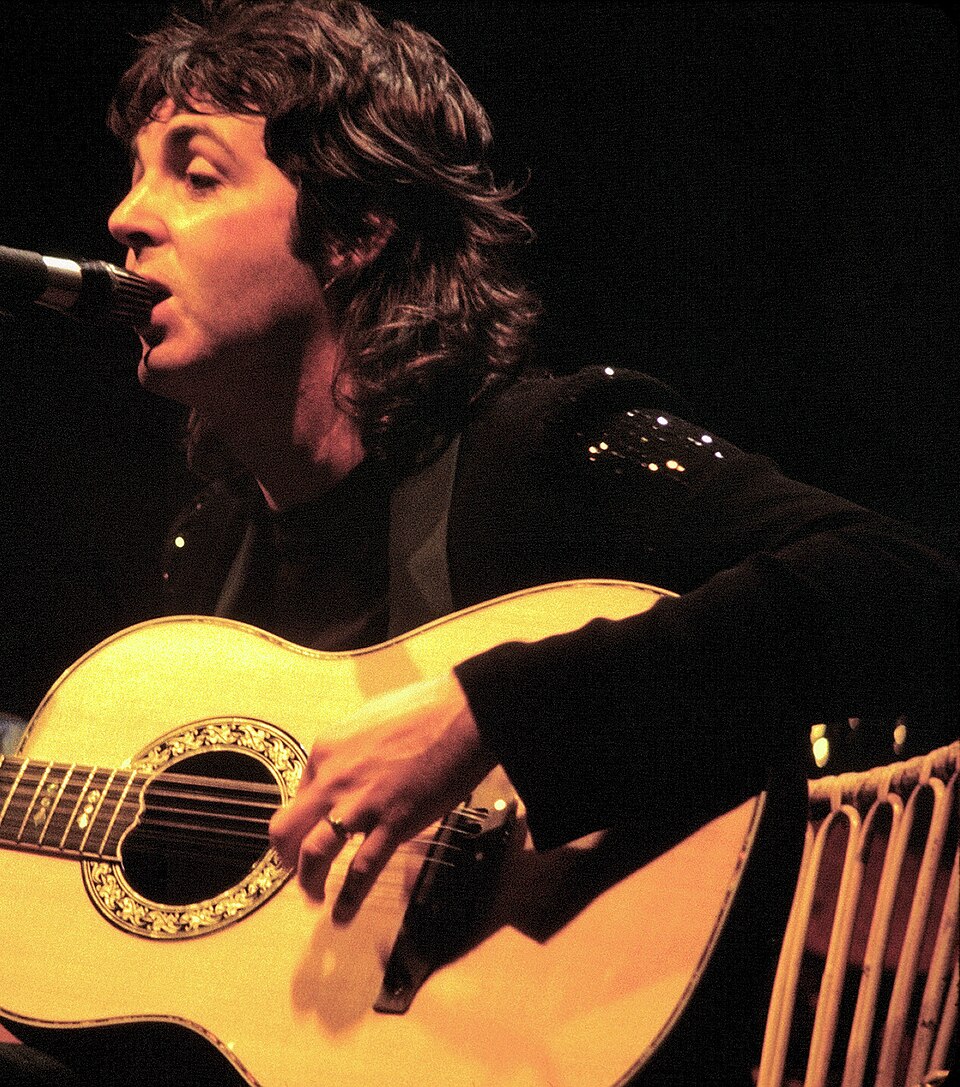
McCartney forms Wings after the Beatles split and the solo album McCartney (1970). The initial core is Paul, Linda, and Denny Laine—sidemen chosen outside a star-supergroup frame. Wild Life (1971) is loose and quickly recorded; tour rehearsals double as writing sessions. Maybe I’m Amazed (1970, solo) sets a vocal approach Wings continues.
02 / 06
Band on the Run: Lagos sessions
Recorded in Lagos with Paul, Linda, Denny Laine, and Denny Seiwell. The title track runs verse-chorus-suite sections in under five minutes. Jet opens with snare crack and stacked backing vocals; Live and Let Die adds George Martin horn stabs. The album hit #1 in the US and UK.
03 / 06
Wings Over America and the end
Expanded lineups add Joe English (drums) and Jimmy McCulloch (guitar). Wings Over America (1976) documents arena shows mixing Beatles catalog with new material. Venus and Mars (1975) and London Town (1978) split between rockers and ballads. McCartney ends Wings in 1981 after further lineup changes and fallout from a marijuana arrest in Japan.
04 / 06
Band on the Run
Three-part structure inside a radio-length single. Core McCartney songwriting from the early Wings peak.
05 / 06
Live and Let Die
Bond theme with George Martin orchestration and Wings rock sections. A pop-event single from 1973.
06 / 06
Silly Love Songs
Disco-adjacent groove from Wings at the Speed of Sound. US #1 single in 1976.
01 / 06
After the Beatles
Paul McCartney’s 1971–81 band after the Beatles. Band on the Run (1973) reached US/UK #1 and remains the main Wings citation for stadium and pop songwriting under a new name.
Lineup versions
Band on the Run core
Peak1971–1981
McCartney/Linda/Laine core through the Band on the Run peak years.
- Paul McCartneyVocals, Bass
- Linda McCartneyKeys, Vocals
- Denny LaineGuitar, Vocals
Quotes
“Wings was a band, not a solo disguise—though I wrote most of it.”
— Paul McCartney, 1974 · Press interview excerpt
“Band on the Run was made under pressure and it sounds like freedom.”
— Paul McCartney, 1980 · Archive interview excerpt
Scenes
| Year | Track | On stage | Tags |
|---|---|---|---|
| 1973 | Band on the RunTitle track from Band on the Run; three-part structure inside a radio-length single. | Paul McCartney, Linda McCartney, Denny Laine, Denny Seiwell | |
| 1973 | Live and Let DieJames Bond theme; George Martin orchestration with Wings rock sections. | Paul McCartney, Linda McCartney, Denny Laine | |
| 1976 | Silly Love SongsFrom Wings at the Speed of Sound; disco-adjacent groove; US #1 single. | Paul McCartney, Linda McCartney, Denny Laine, Joe English |