Decisive · Sixties Classic & Psych
The Doors
Los Angeles four-piece, 1965–1971. No bassist onstage—Ray Manzarek covered bass on Vox Continental and Fender Rhodes pedals. Six studio albums with Jim Morrison; Light My Fire and L.A. Woman are the main radio anchors.

Landmark
Light My Fire · 1967
Krieger tune; organ/guitar solo LP cut and AM edit that put the band on US radio.
Opened
Bass-less Vox/Rhodes setup plus baritone blues-psych song forms, Los Angeles 1967–71.
01 / 07
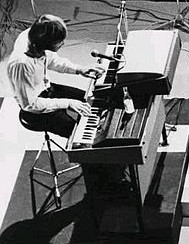
Vox Continental and bass pedals
The band had no bassist onstage. Manzarek’s Vox Continental and Fender Rhodes bass pedals carried the low end while his right hand played organ leads—the most recognizable part of the live sound. Densmore’s drums leaned jazz. Krieger mixed flamenco, blues, and harder rock; slide shows up clearly on Moonlight Drive. Morrison sang baritone, from loud projection to sharper blues color, and wrote lyrics from reading (existentialism, French symbolism, Beat writing) as well as LSD-era imagery.
02 / 07
Classic four until 1971
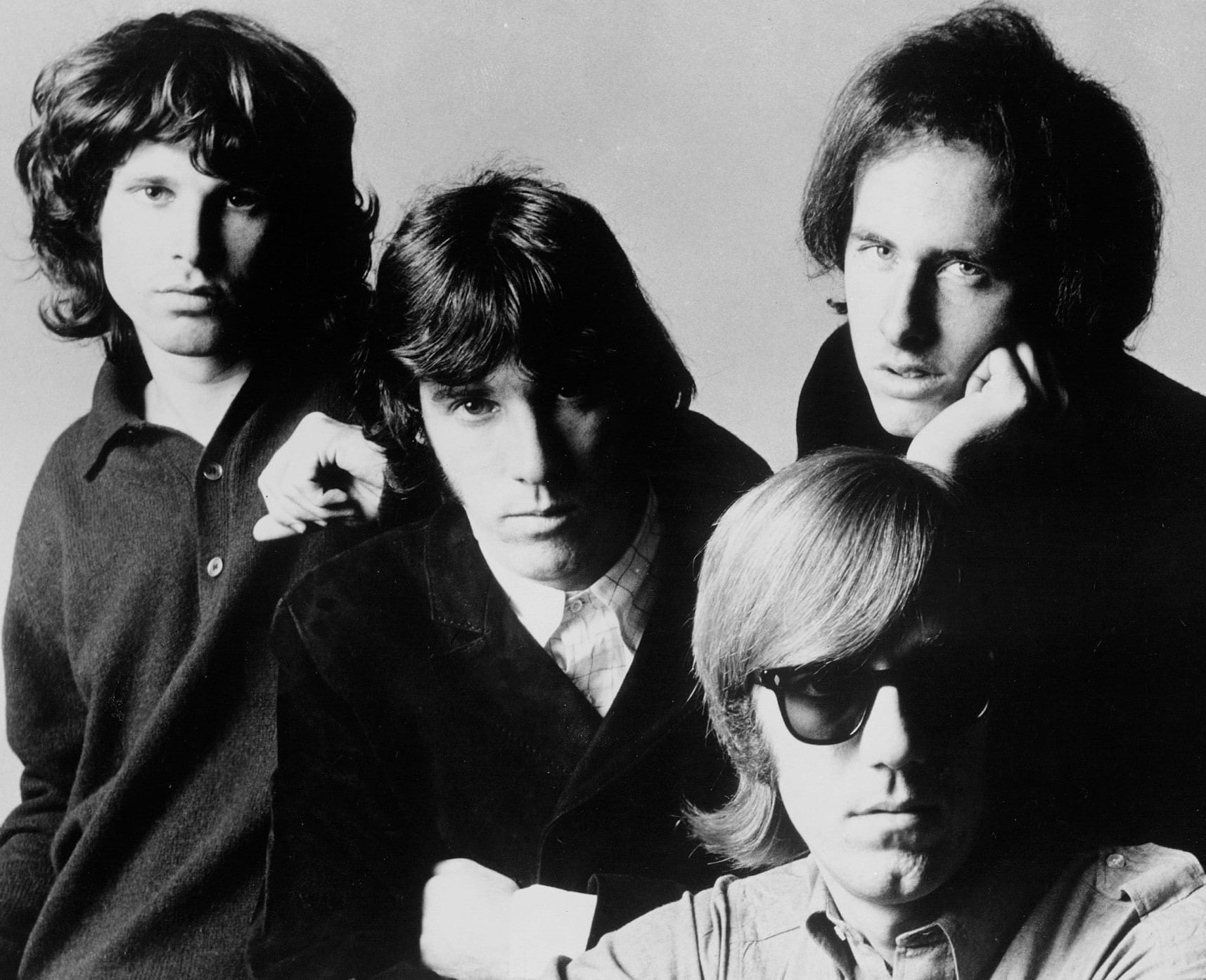
Studio and live peak lineup was Morrison, Manzarek, Krieger, and Densmore from 1965 to 1971—six albums with Morrison. After his death the three remaining members recorded Other Voices and Full Circle with Manzarek and Krieger on vocals. An American Prayer (1978) set Morrison’s poetry to new music. Later Manzarek–Krieger tours with other singers are a separate chapter from the Morrison catalog.
03 / 07
Whisky ban and New Haven arrest
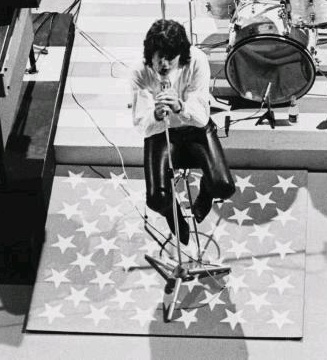
At Hollywood’s Whisky a Go Go, Morrison’s performance of The End led the club to bar the band from further shows. In New Haven, Connecticut, he confronted police onstage and was arrested. Those incidents sit beside the radio hits as part of how the group was covered in the late 1960s.
04 / 07
Light My Fire
Written mainly by Krieger. The album cut runs past seven minutes with organ and guitar solos; the AM edit cuts the middle. It was the band’s widest early US radio exposure in 1967, from the debut The Doors.
05 / 07
Hello, I Love You and the Kinks comparison
Waiting for the Sun (1968) was a difficult Morrison-era session, but Hello, I Love You reached US #1. Listeners and writers have long noted its resemblance to The Kinks’ All Day and All of the Night. The same album also holds The Unknown Soldier and Five to One.
06 / 07
Morrison Hotel to L.A. Woman
Morrison Hotel (1970) moved toward blues and funk—Roadhouse Blues, Peace Frog—after Soft Parade’s orchestration. Absolutely Live the same year documented the band as a strong live act. L.A. Woman (1971) kept that momentum: Crawling King Snake (John Lee Hooker), boogie on The WASP, the title track, and Riders on the Storm with prominent Manzarek keyboards. Morrison’s voice grew raspier from smoking; he left for Paris before the April release and died in July.
07 / 07
After 1971
The End appeared in Apocalypse Now (1979). Hopkins and Sugarman’s No One Here Gets Out Alive (1980) and Stone’s film (1991) fed later catalog sales. Alive, She Cried (1983) did solid live-compilation business. Post-punk and goth acts often cite Morrison’s baritone and spoken breaks. The keyboard-as-bass live setup remains uncommon in rock.
01 / 07
Vox Continental and bass pedals
Los Angeles four-piece, 1965–1971. No bassist onstage—Ray Manzarek covered bass on Vox Continental and Fender Rhodes pedals. Six studio albums with Jim Morrison; Light My Fire and L.A. Woman are the main radio anchors.
Lineup versions
Classic four
Peak1965–1971
Morrison-era studio and live lineup through L.A. Woman. Manzarek: Vox Continental + Fender Rhodes bass pedals.
- Jim MorrisonVocals
- Ray ManzarekKeyboards, Bass Pedals
- Robby KriegerGuitar
- John DensmoreDrums
Post-Morrison trio
1971–1973
Other Voices and Full Circle; Manzarek and Krieger shared lead vocals.
- Ray ManzarekKeyboards, Vocals
- Robby KriegerGuitar, Vocals
- John DensmoreDrums
Quotes
“Expose yourself to your deepest fear; after that, fear has no power.”
— Jim Morrison, 1969 · Press/poetry interview excerpt
“No bass player. Ray’s left hand was the bass.”
— Robby Krieger, 1970 · Archive interview excerpt
Scenes
| Year | Track | On stage | Tags |
|---|---|---|---|
| 1967 | Light My FireKrieger composition; LP cut over seven minutes with organ and guitar solos. Shortened edit hit Billboard Hot 100 in April 1967. | Jim Morrison, Ray Manzarek, Robby Krieger, John Densmore | |
| 1967 | The EndLong closer on the debut. After Morrison’s Whisky a Go Go performance of the song, the club barred the band. | Jim Morrison, Ray Manzarek, Robby Krieger, John Densmore | |
| 1968 | Hello, I Love YouUS #1 from Waiting for the Sun. Often compared to The Kinks’ All Day and All of the Night. | Jim Morrison, Ray Manzarek, Robby Krieger, John Densmore | |
| 1970 | Roadhouse BluesFrom Morrison Hotel. Blues-leaning return after Soft Parade’s strings and horns. | Jim Morrison, Ray Manzarek, Robby Krieger, John Densmore | |
| 1971 | Riders on the StormFrom L.A. Woman. Electric piano, rain effects; late-period quieter vocal. | Jim Morrison, Ray Manzarek, Robby Krieger, John Densmore |