Decisive · Metal Branches
Metallica
Los Angeles / Bay Area thrash band formed in 1981. Master of Puppets (1986) and the Black Album (1991) scaled underground speed metal to mainstream rock radio.

Landmark
Seek & Destroy · 1983
Early thrash speed document.
Opened
Underground thrash craft scaled to 1990s rock radio.
01 / 06
Thrash craft at arena scale
Metallica matter as the thrash band that kept downpicked riff discipline while learning mass-chorus writing. Underground credibility and MTV-era reach share one catalog. Big Four leader by sales and citation.
02 / 06
Burton era vs Newsted/Rock era
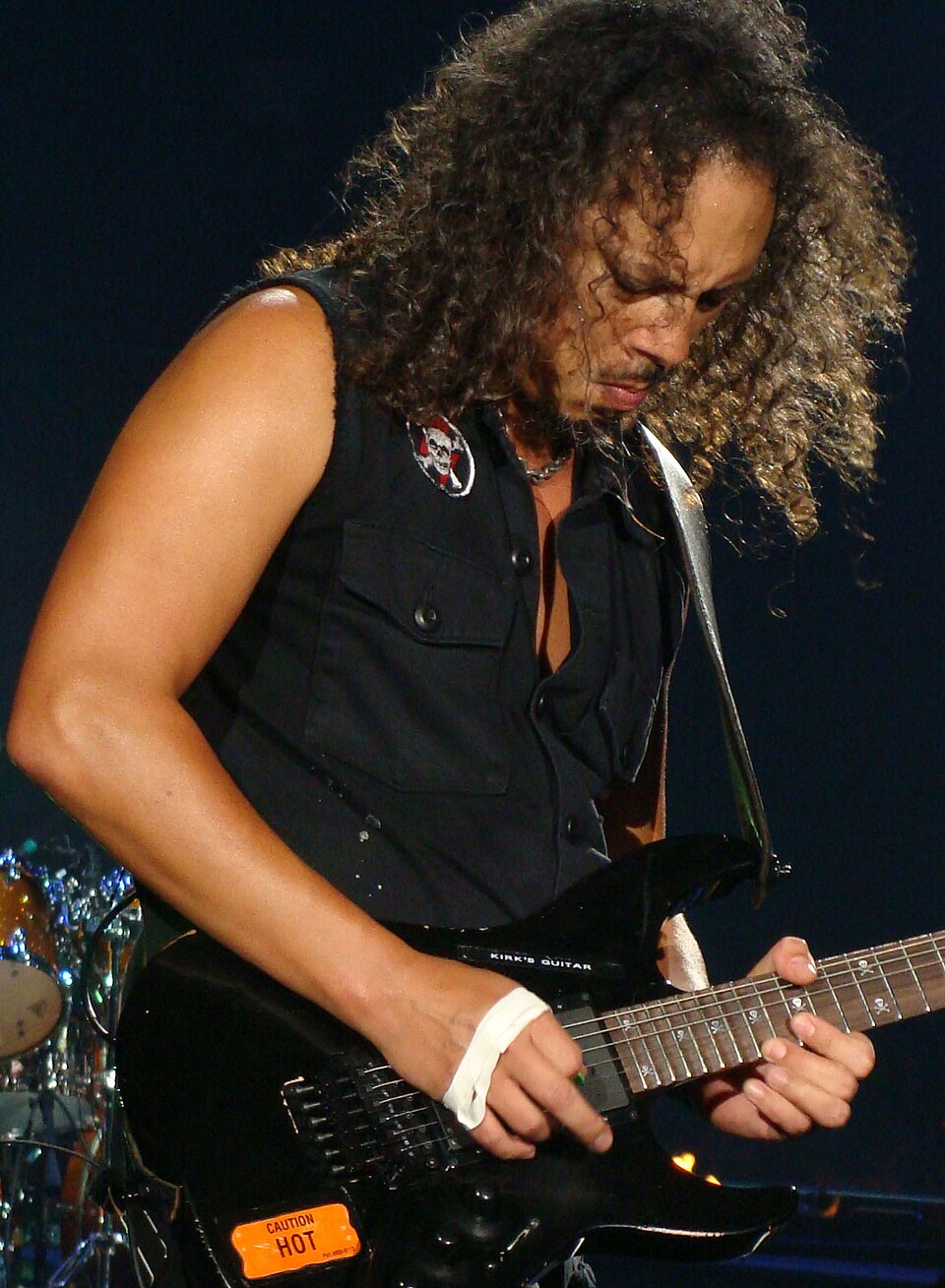
Cliff Burton’s years are the progressive-thrash citation. Post-1986 bass change and 1991 production shift create distinct versions under one name. Hammett after Mustaine: lead-guitar continuity with a different origin story. Early chairs also include McGovney and a short Grant guitar credit on Hit the Lights. The 2011 anniversary bills put Mustaine, Butler (Black Sabbath), Cantrell (Alice in Chains), and Halford (Judas Priest) on the same stage.
03 / 06
Master of Puppets: long-form thrash
Multi-section riff piece—speed, mid-tempo crush, clean bridge. Peak of pre-mainstream song length. Clear arrangement reference inside thrash.
04 / 06
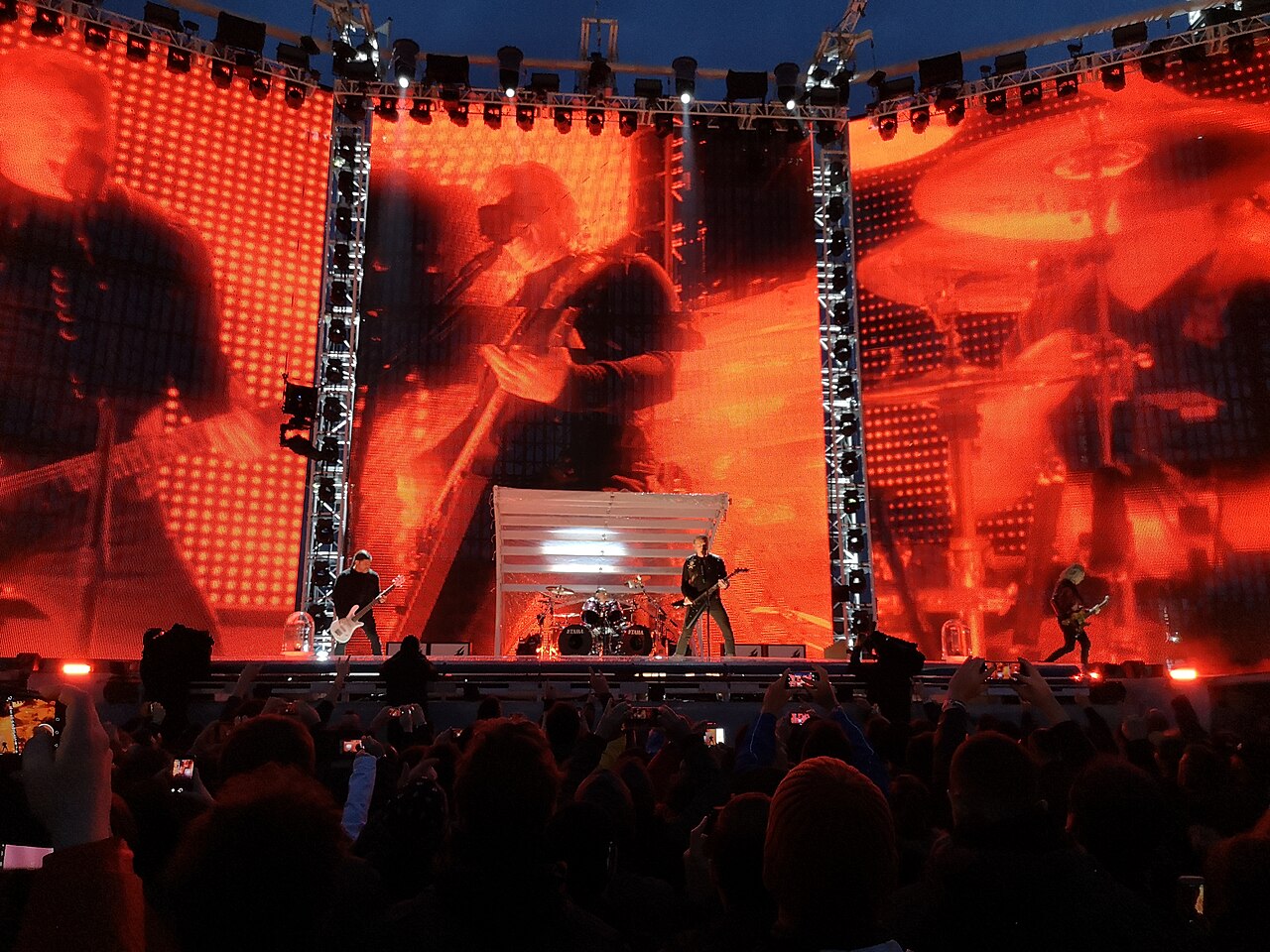
Enter Sandman: radio-length riff
Bob Rock sheen, shorter runtime, chant chorus—thrash downpicking inside hard-rock radio format. The turn toward 1990s mainstream metal.
05 / 06
Downpick discipline, later forks
Right-hand stamina and chromatic riff writing feed metalcore and modern metal. Load/Reload and Napster-era fights are separate institutional chapters. Musical constant: Hetfield rhythm guitar.
06 / 06
Work ethic lines beside the riffs
Interview excerpts about practice and touring density match the recorded attack. Prefer process talk over mythic language.
01 / 06
Thrash craft at arena scale
Los Angeles / Bay Area thrash band formed in 1981. Master of Puppets (1986) and the Black Album (1991) scaled underground speed metal to mainstream rock radio.
Listen
Lineup versions
Cliff Burton era
Peak1982–1986
Mustaine out, Hammett (ex-Exodus) in before Kill ’Em All. Burton died in the 1986 Sweden bus crash after the Ozzy US tour.
- James HetfieldVocals, Guitar
- Lars UlrichDrums
- Kirk HammettGuitar
- Cliff BurtonBass
Jason Newsted era
1986–2001
Newsted from Flotsam and Jetsam, first on the 1987 Garage Days EP. Trujillo, ex-Suicidal Tendencies and Ozzy’s bassist, replaced him around St. Anger (2003).
- James HetfieldVocals, Guitar
- Lars UlrichDrums
- Kirk HammettGuitar
- Jason NewstedBass
Quotes
“We play metal. That's what we do.”
— James Hetfield, 1991 · Interview excerpt
“Cliff taught us that the bass can be a lead voice.”
— Lars Ulrich, 1986 · Archive interview excerpt
Scenes
| Year | Track | On stage | Tags |
|---|---|---|---|
| 1986 | Master of PuppetsLong-form thrash arrangement peak. | James Hetfield, Lars Ulrich, Kirk Hammett | |
| 1991 | Enter SandmanRadio-length riff with chant chorus. | James Hetfield, Lars Ulrich, Kirk Hammett |