Decisive · Garage Revival & Mass Alt
Interpol
New York four-piece formed in 1997. Turn on the Bright Lights (2002, Matador) and Antics (2004) put Joy Division–echo bass, reverb guitar, and black-suit presentation back on early-2000s indie radio.

Landmark
Obstacle 1 · 2002
Staccato guitar and Banks baritone; main debut-era face.
Opened
Joy Division–echo post-punk via NYC; Bright Lights as debut reference.
01 / 06
Joy Division echo on NYC indie radio
Interpol restored post-punk bass prominence and reverb guitar as mid-tempo writing—not garage speed. Turn on the Bright Lights (2002, Matador) arrived beside The Strokes but traded swagger for restraint. Banks’s baritone and Kessler’s arpeggiated delay define the sound. Black-suit, black-and-white press photos are part of how the band was cited.
02 / 06
Classic four through Antics
1997–2010 defining lineup: Banks, Kessler, Carlos D, Fogarino—dual guitar/bass division, no keyboard player on stage. Antics (2004) adds organ textures in studio while keeping the same four names live. Carlos D’s 2010 exit shifts bass duties; Bright Lights and Antics remain the citation core. Fogarino’s dry, forward kit keeps songs mid-tempo.
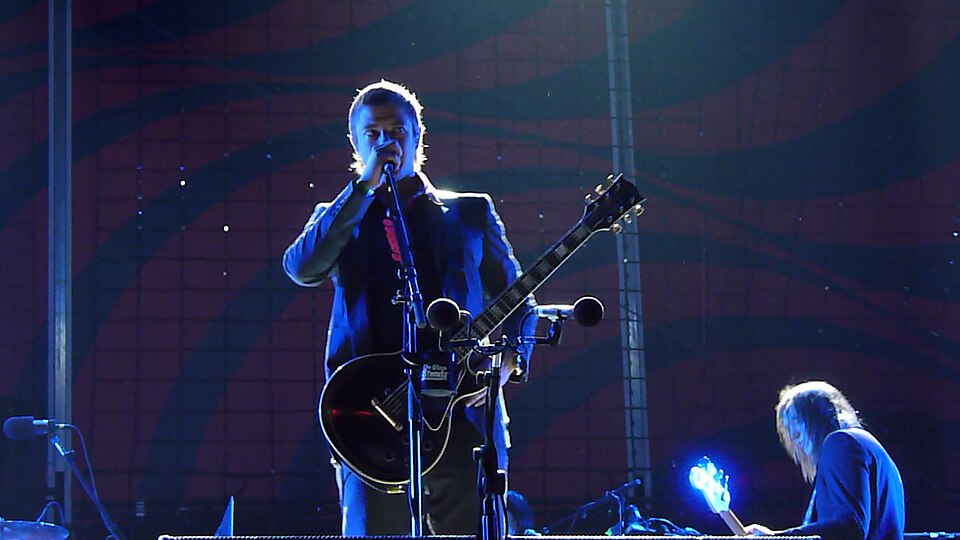
03 / 06
Post-punk revival reference for 2000s indie
Bass-forward mixes and delay guitar stacks were widely copied by gloom-leaning revival bands through the 2000s. Joy Division and The Cure are named ancestors; Interpol translated them for Matador-era indie radio. UK acts including Arctic Monkeys shared chart timing; Interpol’s direct lineage is post-punk arrangement. Citation density peaks in 2002–04.
04 / 06
Obstacle 1
Tight verse, open chorus; Dengler bass melody carries the hook on the debut album.
05 / 06
Evil
Antics single with organ undercurrent and mid-tempo swagger for second-album radio.
06 / 06
NYC
Delay-heavy dual guitars and dry vocal; a mood piece from Turn on the Bright Lights.
01 / 06
Joy Division echo on NYC indie radio
New York four-piece formed in 1997. Turn on the Bright Lights (2002, Matador) and Antics (2004) put Joy Division–echo bass, reverb guitar, and black-suit presentation back on early-2000s indie radio.
Lineup versions
Turn On the Bright Lights four
Peak2000–2010
Dengler bass era; Bright Lights and Antics as citation core.
- Paul BanksVocals, Guitar
- Daniel KesslerGuitar
- Carlos DenglerBass
- Sam FogarinoDrums
Quotes
“We wanted the guitars to feel like New York at night—cold and close.”
— Daniel Kessler, 2002 · Press interview excerpt
“Carlos made the low end as melodic as the vocals.”
— Paul Banks, 2004 · Archive interview excerpt
Scenes
| Year | Track | On stage | Tags |
|---|---|---|---|
| 2002 | Obstacle 1From Turn on the Bright Lights; tight verse, open chorus; Dengler bass melody as hook. | Paul Banks, Daniel Kessler, Carlos D, Sam Fogarino | |
| 2004 | EvilAntics single; organ undercurrent, mid-tempo groove for second-album radio. | Paul Banks, Daniel Kessler, Carlos D, Sam Fogarino | |
| 2002 | NYCDelay-heavy dual guitars, dry vocal; debut-album mood piece. | Paul Banks, Daniel Kessler, Carlos D, Sam Fogarino |