Key figure · Roots & Rock'n'Roll
Elvis Presley
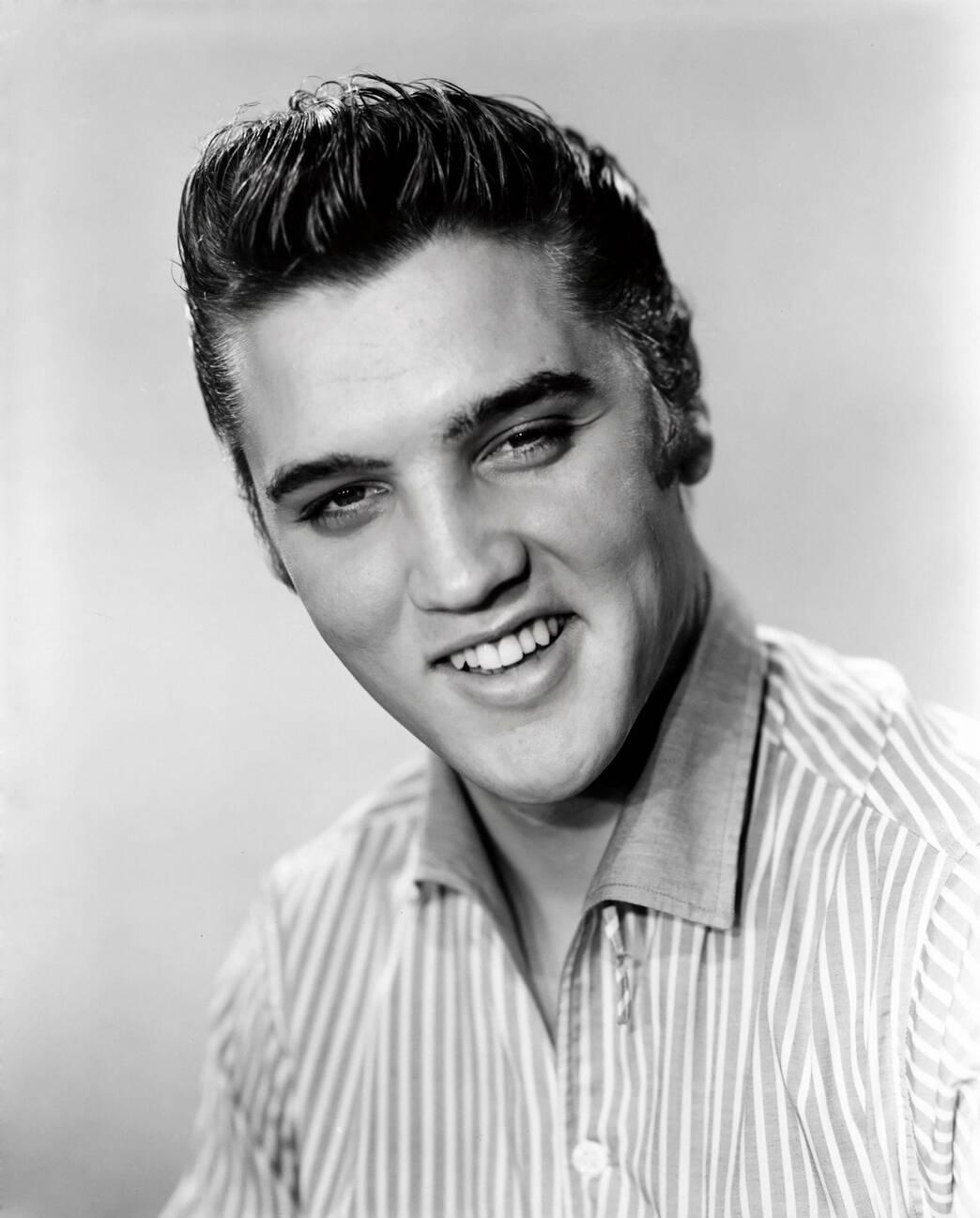
Presley is one of the key figures through whom 1950s rock’n’roll entered US mainstream pop culture. Early records came from Sun in Memphis; after the 1955 move to RCA, national distribution and TV exposure grew. In 1954–58, Scotty Moore, Bill Black, and D.J. Fontana were his closest early collaborators. This site files him as a person node (singer/actor), not as a band named Elvis.

Landmark
That's All Right · 1954
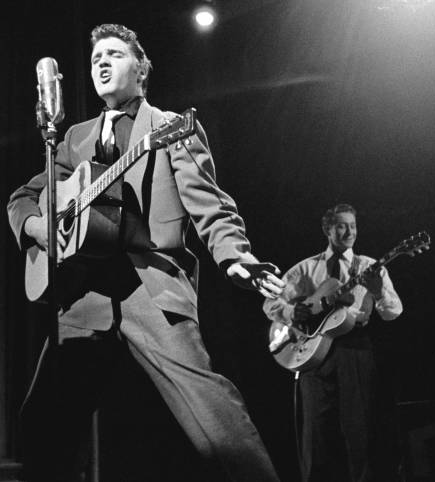
Recorded July 1954 at Sun in Memphis: Presley singing Crudup’s blues song, Scotty Moore on electric guitar, Bill Black on bass.
Opened
Presley, Moore, and Black’s early Sun sides are a key case in how 1950s rock’n’roll formed—drawing on blues, country, and R&B rather than one single source.
01 / 05
From Memphis to a national audience
The 1954 Sun sessions were mainly a Memphis story. Presley then widened his audience through Southern tours, radio, and record releases. After RCA bought his contract in 1955, distribution scaled up. In 1956 Heartbreak Hotel was his first RCA single and a key step into the national pop market. This site’s early lineup record centers on Presley, Scotty Moore, Bill Black, and D.J. Fontana. Moore, Black, and Fontana still worked with him in the late 1950s; Moore and Black left in 1958.
02 / 05
That’s All Right
That’s All Right (1954) comes from blues singer Arthur “Big Boy” Crudup. On Sun’s first formal session, Presley sang and played guitar, Scotty Moore played electric guitar, and Bill Black played bass. After the cut, Sun issued the single; Memphis DJ Dewey Phillips played it, and local attention followed quickly. The other side was Bill Monroe’s Blue Moon of Kentucky. Together the two sides show early Presley using both blues and country material.
03 / 05
Hound Dog
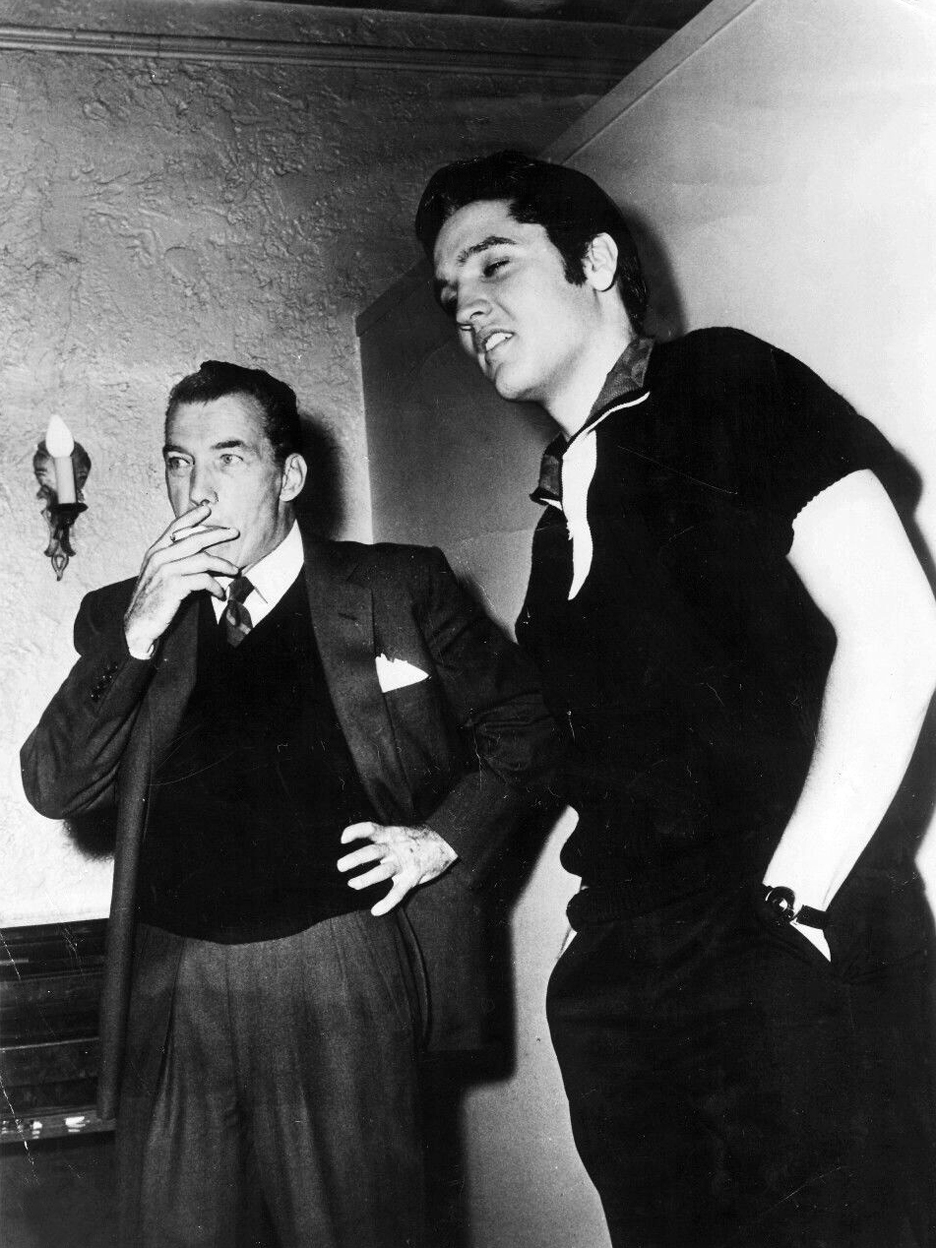
Hound Dog was first recorded by Big Mama Thornton in 1952. The version Presley used in 1956 was shaped by Freddie Bell and the Bellboys’ rewritten live arrangement in Las Vegas—not a straight lift of Thornton’s record alone. In June 1956 he performed it on The Milton Berle Show, then repeatedly on The Ed Sullivan Show. The first Sullivan appearance on 9 September 1956 was reported to draw about 60 million viewers. The 6 January 1957 Sullivan broadcast, shot from the waist up, became a well-known case of TV framing and censorship.
04 / 05
Singer and working musicians
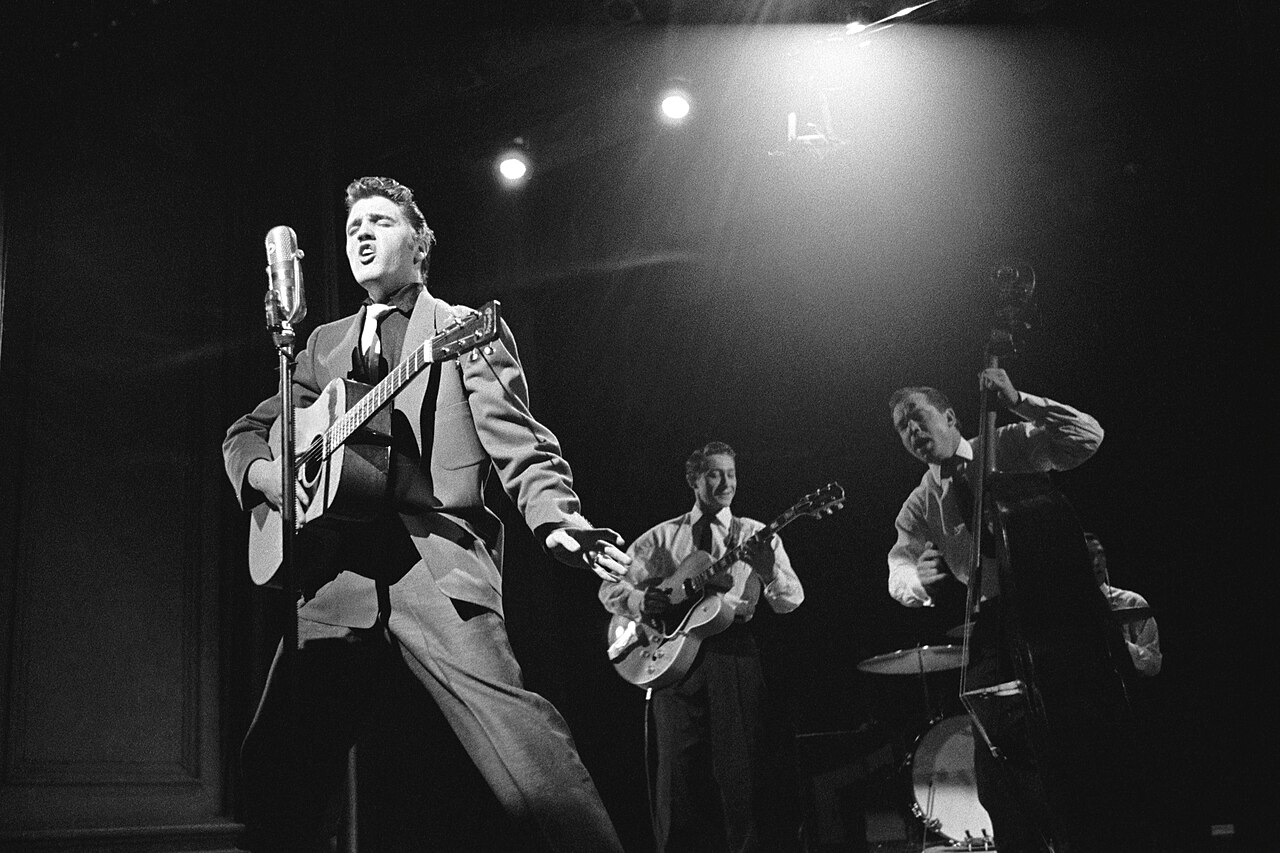
In the 1950s Presley did not tour as a fixed act called “the Elvis band.” He worked as a singer with regular session and road players. The three most important early musicians were Scotty Moore (guitar), Bill Black (bass), and D.J. Fontana (drums). They worked with him from the early Sun period into around 1958 and are central to his early sound. That early lineup is not the TCB Band. The TCB Band formed in 1969 after Presley returned to live performance, and should not be mixed into the 1954–58 roster.
05 / 05
Media and performance
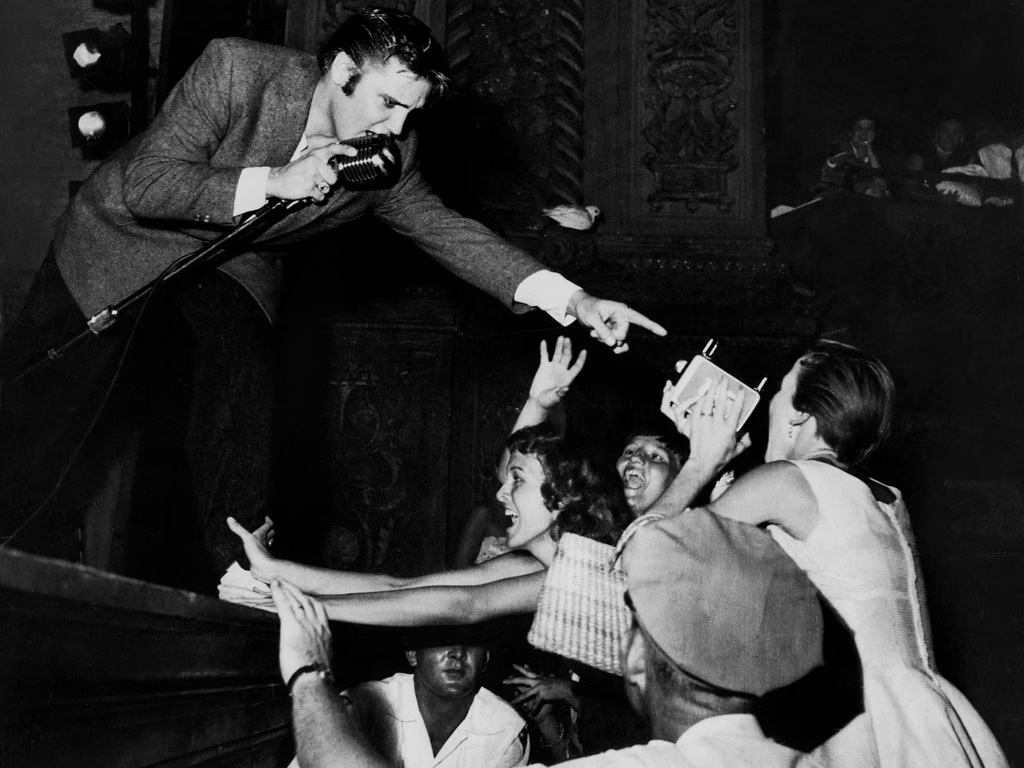
National fame did not come from records alone. In 1956 he appeared on Stage Show, The Milton Berle Show, The Steve Allen Show, and The Ed Sullivan Show. Records, tours, and television together expanded his public reach. For the music of this period, the Sun sides and 1950s RCA singles are the direct evidence. Television adds another layer: stage moves, band setup, and how the act looked on camera.
01 / 05
From Memphis to a national audience
Presley is one of the key figures through whom 1950s rock’n’roll entered US mainstream pop culture. Early records came from Sun in Memphis; after the 1955 move to RCA, national distribution and TV exposure grew. In 1954–58, Scotty Moore, Bill Black, and D.J. Fontana were his closest early collaborators. This site files him as a person node (singer/actor), not as a band named Elvis.
Listen
Lineup versions
Sun / RCA · 1954–1958
Peak1954–1958
Early regular collaborators on records and shows. Moore and Black left Presley’s team in 1958. Not the 1969 TCB Band.
- Elvis PresleyVocals, Guitar
- Scotty MooreGuitar
- Bill BlackBass
- D.J. FontanaDrums
Quotes
“I don't know anything about music. In my line you don't have to.”
— Elvis Presley · Widely attributed; year and primary source vary by citation
“Rhythm is something you either have or don't have, but when you have it, you have it all over.”
— Elvis Presley · Often dated 1956 Jacksonville interview; primary source claims vary
Scenes
| Year | Track | On stage | Tags |
|---|---|---|---|
| 1954 | That's All RightSun Records session: Presley sings and plays guitar; Scotty Moore on electric guitar; Bill Black on bass. | Elvis Presley, Scotty Moore, Bill Black | |
| 1956 | Hound DogRCA single. Presley’s cut followed Freddie Bell and the Bellboys’ rewrite more than a direct copy of Big Mama Thornton; national TV (Milton Berle, Ed Sullivan) widened its reach. | Elvis Presley, Scotty Moore, Bill Black, D.J. Fontana |