Early rock’n’roll · Guitar & songwriter
Chuck Berry
Chuck Berry was a major American rock’n’roll songwriter and guitarist of the 1950s. After Maybellene (1955) he issued a run of lasting songs that joined blues, country, and R&B materials with narratives aimed at young listeners. In the 1960s the Beatles, the Rolling Stones and others kept playing his material, carrying those songs into a new rock repertoire.

Landmark
Johnny B. Goode · 1958
Rock song with a guitarist as protagonist. Opening guitar figure, clear rhythm, and narrative lyric are a common entry to Berry’s music.
Opened
Berry combined blues, country, and R&B with guitar, short narratives, and lyrics aimed at young listeners. Chess sides were later replayed by many rock musicians.
01 / 05
Songwriter and guitarist
Berry’s importance is not guitar technique alone. His songs often use concrete subjects—people, cars, school, dances, life on the road—and put young listeners’ daily experience into rock songs. Maybellene is a car chase; School Day is student life; Johnny B. Goode follows a country boy learning guitar and hoping to become a musician. His guitar playing is part of how those songs work. Chess cuts usually avoid heavy arrangement and let guitar riffs, rhythm, and voice drive the track.
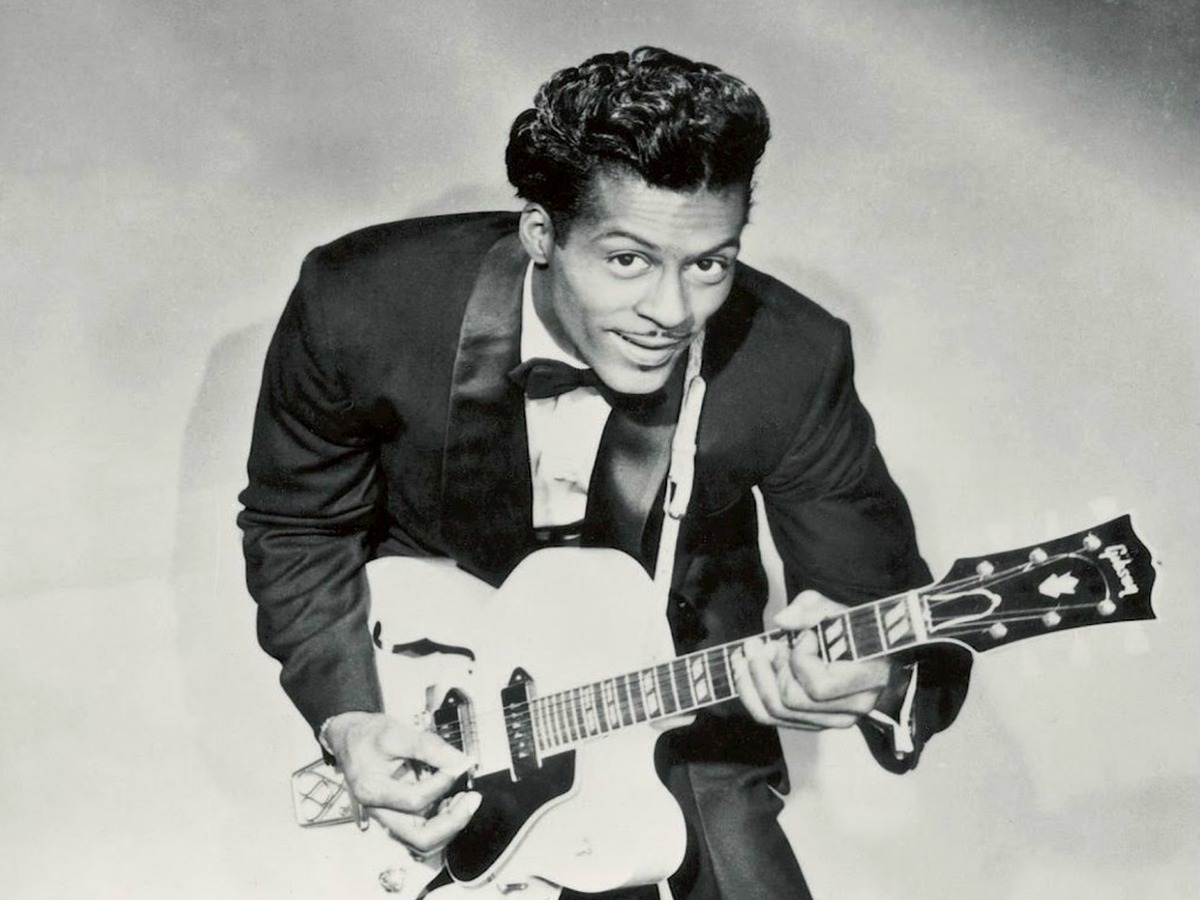
02 / 05
Maybellene
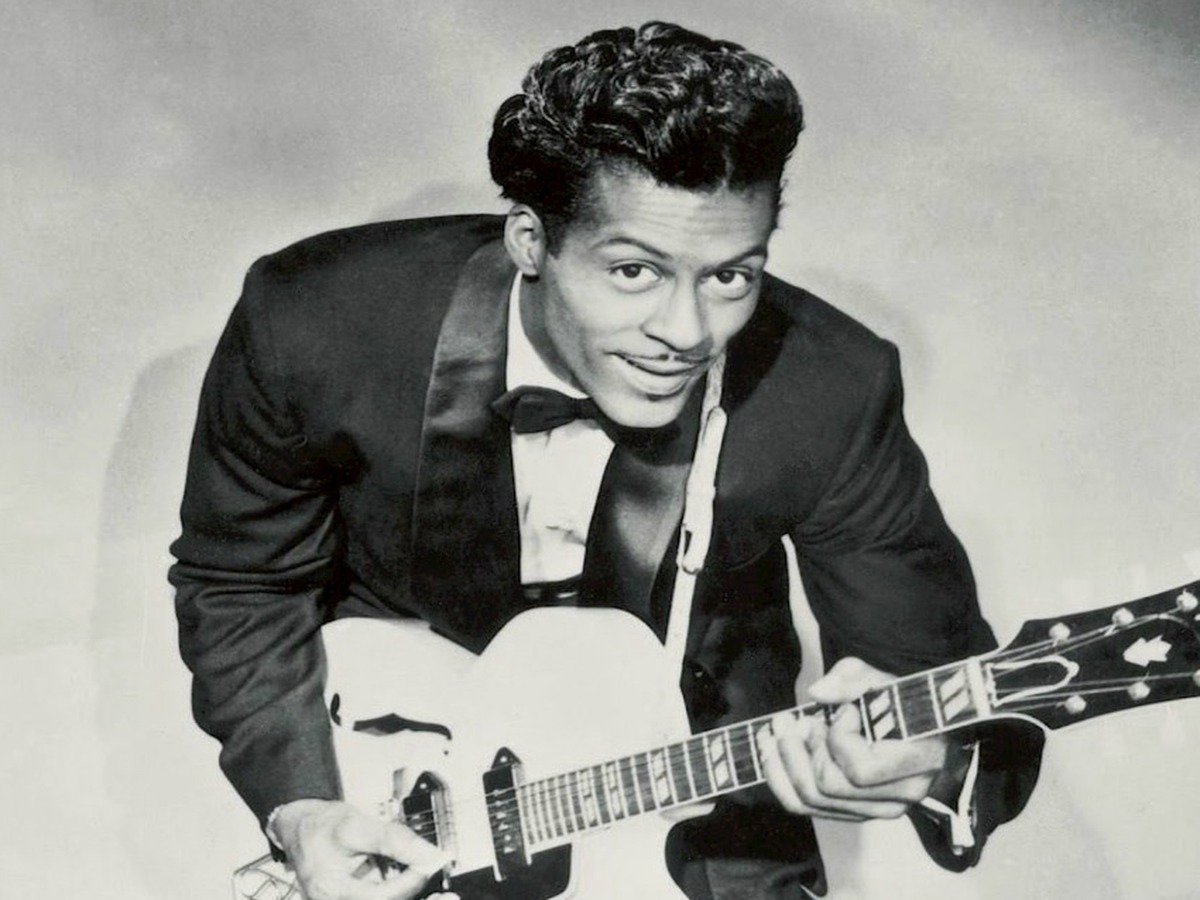
Maybellene (1955) was Berry’s breakthrough Chess single. Its musical base came from the country song Ida Red; Berry reworked it with new lyrics. Chess issued it under the title Maybellene. The cut joins country guitar and melody material with an R&B beat. The car-chase story reached No. 5 on Billboard’s pop singles chart and No. 1 on the R&B chart—his first major commercial success.
03 / 05
Johnny B. Goode
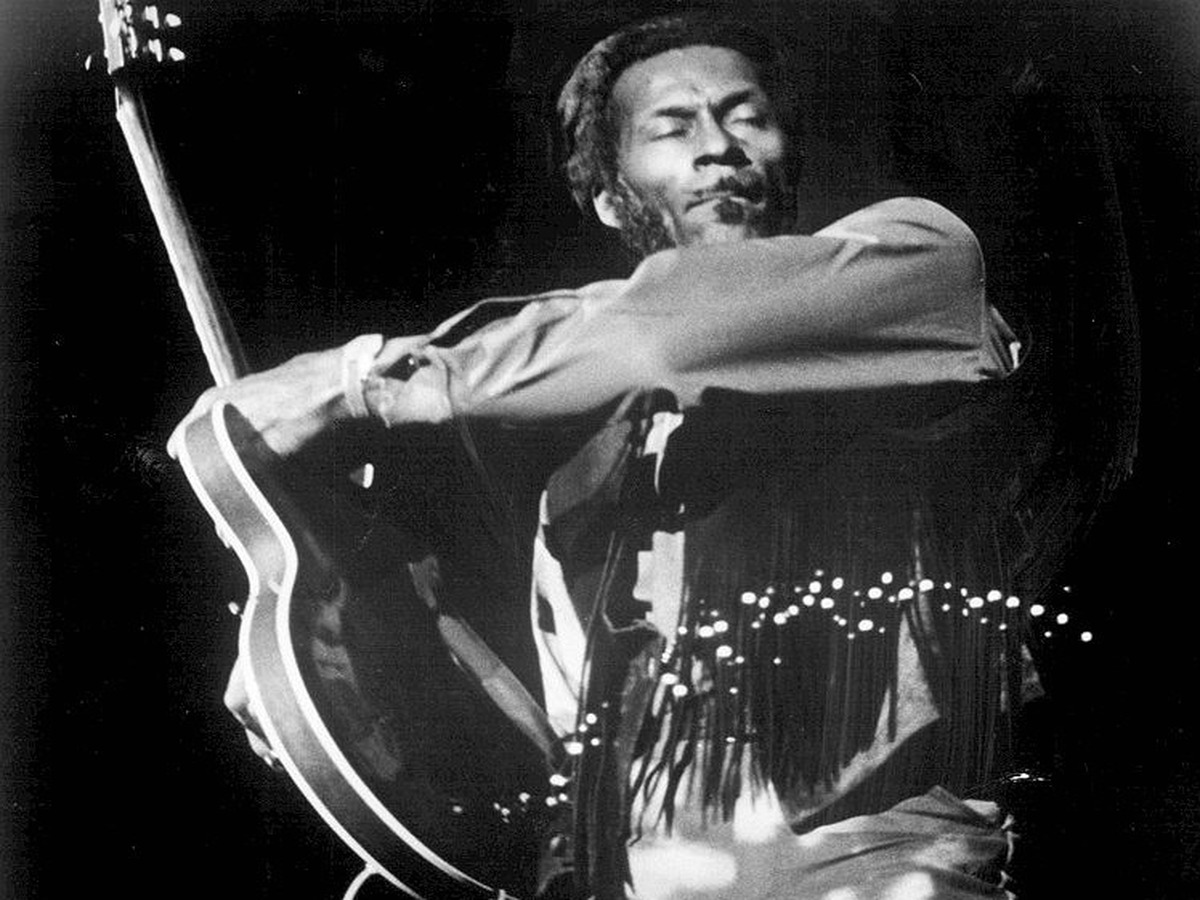
Johnny B. Goode (1958) is among Berry’s best-known songs. It tells of a guitarist from rural Louisiana who hopes to become a musician through playing. The lyric puts guitar, stage, and upward ambition in one story. The recording centers on Berry’s electric guitar and voice; Johnnie Johnson’s piano is also a key part of this early sound. Rock & Roll Hall of Fame materials note that Johnson and Berry’s Chess partnership helped shape rhythmic patterns later rock players used. The opening guitar figure is one familiar entry point to Berry—not the only or universal “standard” source for rock intros.
04 / 05
Influence on British rock
Berry’s songs kept being played by a new generation of rock bands in the 1960s. The Beatles, the Rolling Stones and other British acts recorded or performed his material. For them he offered more than cover repertoire: a mature rock song craft—clear guitar sections, direct rhythm, and lyrics about young people’s lives. His catalog became one important source as 1960s British rock re-engaged American blues, R&B, and rock and roll.
05 / 05
Guitar, stage, and image
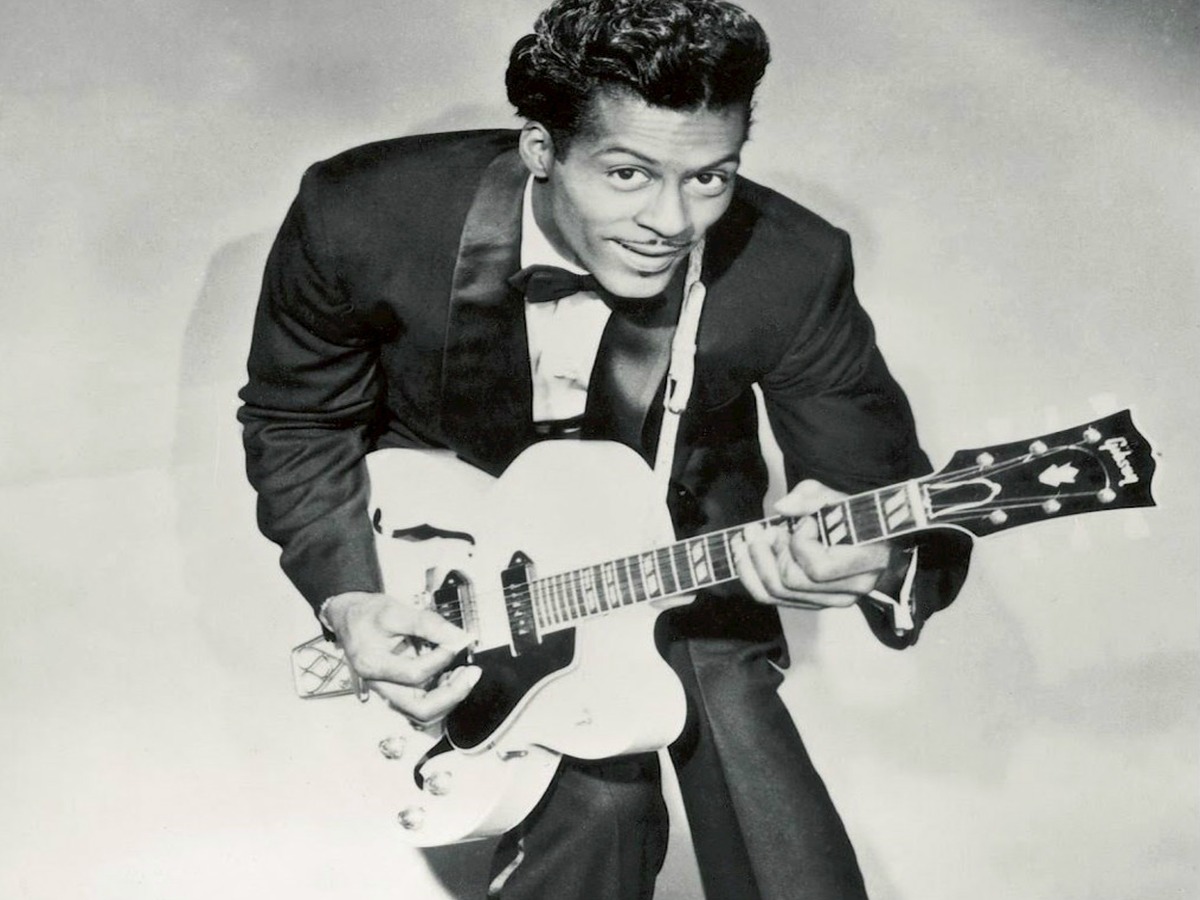
Berry’s stage act was part of his public image. One of the best-known moves is the duck walk, later a signature of his shows and documented in the 1959 Newport Jazz Festival film Jazz on a Summer’s Day. His influence cannot be reduced to that move. For later players, the lasting part is the songs: guitar riffs, clear rhythm, concise form, and song shapes other bands can play directly.
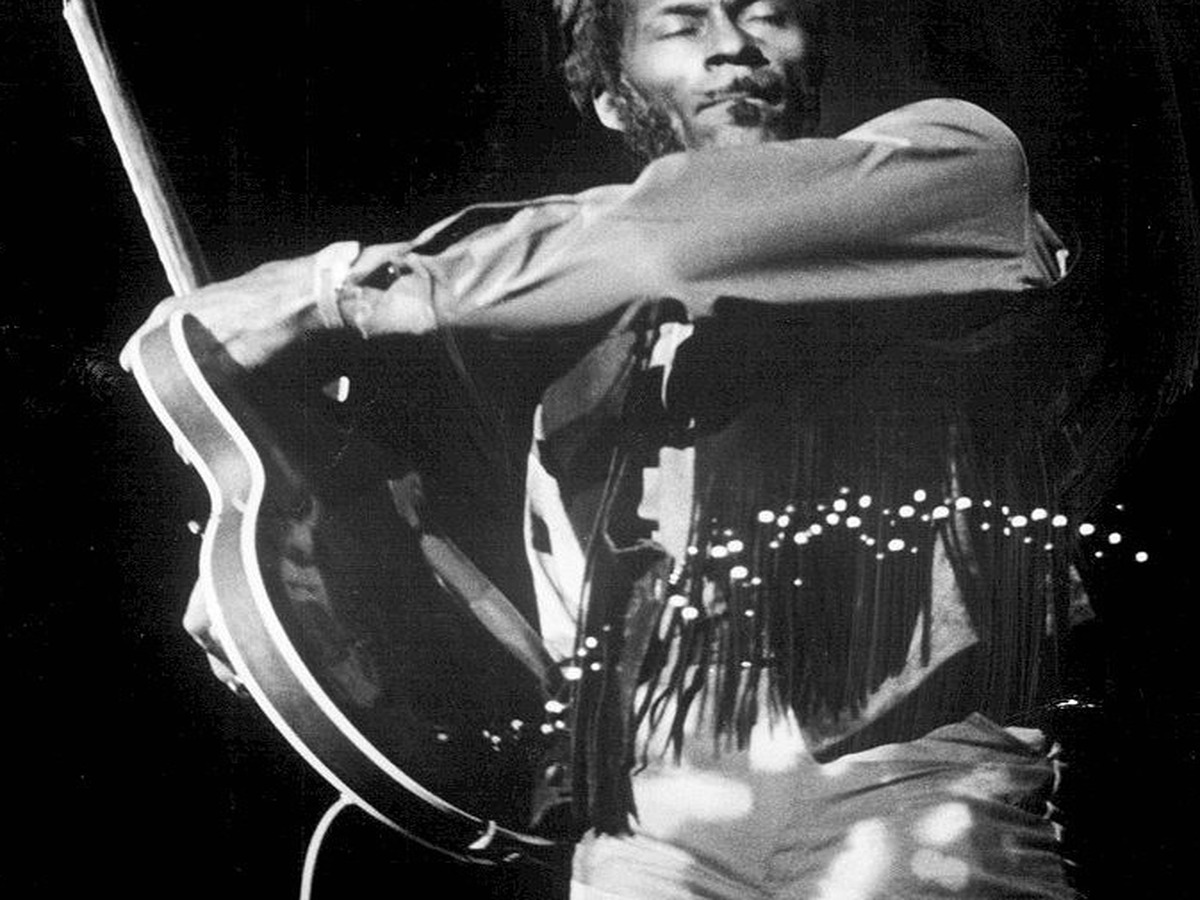
01 / 05
Songwriter and guitarist
Chuck Berry was a major American rock’n’roll songwriter and guitarist of the 1950s. After Maybellene (1955) he issued a run of lasting songs that joined blues, country, and R&B materials with narratives aimed at young listeners. In the 1960s the Beatles, the Rolling Stones and others kept playing his material, carrying those songs into a new rock repertoire.
Lineup versions
Chess sessions · 1955–1959
Peak1955–1959
Chess recordings were not one unchanging band; different dates used different players. Johnnie Johnson was a key long-term partner; session lists also name Willie Dixon, Fred Below and others on various cuts.
- Chuck BerryVocals, Guitar
- Johnnie JohnsonPiano
- Willie DixonBass
- Fred BelowDrums
Quotes
“Everything I wrote about wasn’t about me, but about the people listening.”
— Chuck Berry · Rock & Roll Hall of Fame materials on Berry
Scenes
| Year | Track | On stage | Tags |
|---|---|---|---|
| 1955 | MaybelleneChess breakthrough single. Reworked from the country song Ida Red; country guitar/melody material with an R&B beat; car-chase lyric. | Chuck Berry | |
| 1958 | Johnny B. GoodeChess single. Young guitarist as protagonist; Berry’s guitar and Johnnie Johnson’s piano are central to the cut. | Chuck Berry, Johnnie Johnson |