Decisive · Metal Branches
Van Halen
Pasadena hard-rock band formed in 1972. Two-handed tapping and high-gain midrange became a guitar-hero standard; the debut Van Halen (1978) is the main early citation.

Landmark
Eruption · 1978
Tapping étude that reset guitar-hero expectations.
Opened
High-gain precision plus Roth/Hagar singer-swap as twin chronicle facts.
01 / 06
Tapping as hard-rock practice standard
Van Halen (1978) brings two-handed tapping, pinched harmonics, and high-gain midrange into hard-rock practice. Templeman keeps songs short; Roth sells carnival frontman energy. Guitar-hero culture after 1978 cites this debut as a precision step beyond blues-rock defaults.
02 / 06
Roth era vs Hagar era
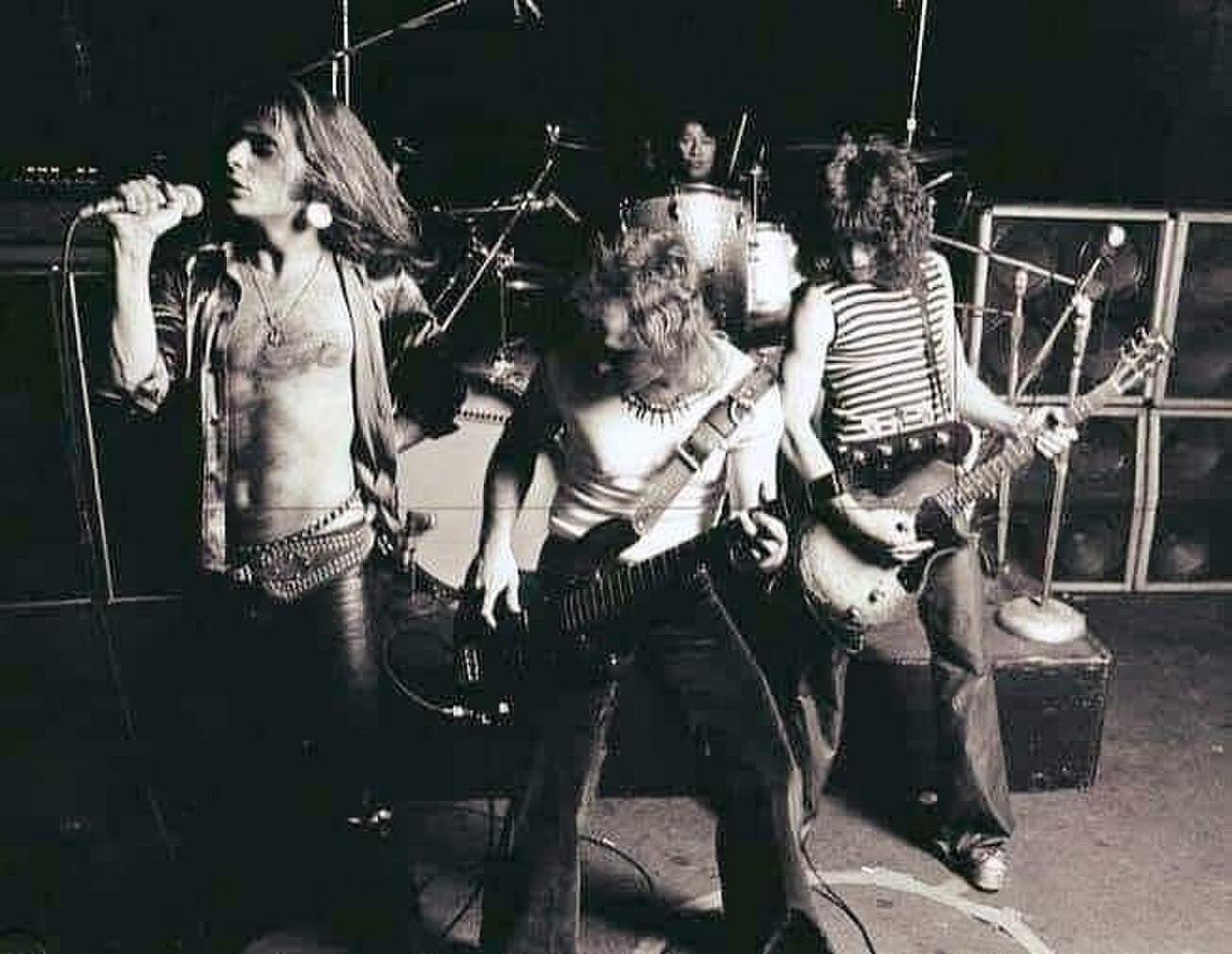
Peak chronicle silhouette: Roth / Eddie / Alex / Anthony (1978–85). In 1985 Hagar joins; 5150–Balance is the radio-metal chapter fans call Van Hagar. From 2007 Roth returns for reunion tours. Same guitar core; two vocal approaches. Peak flag stays on the Roth-era classic.
03 / 06
Brothers, bark, harmony bass
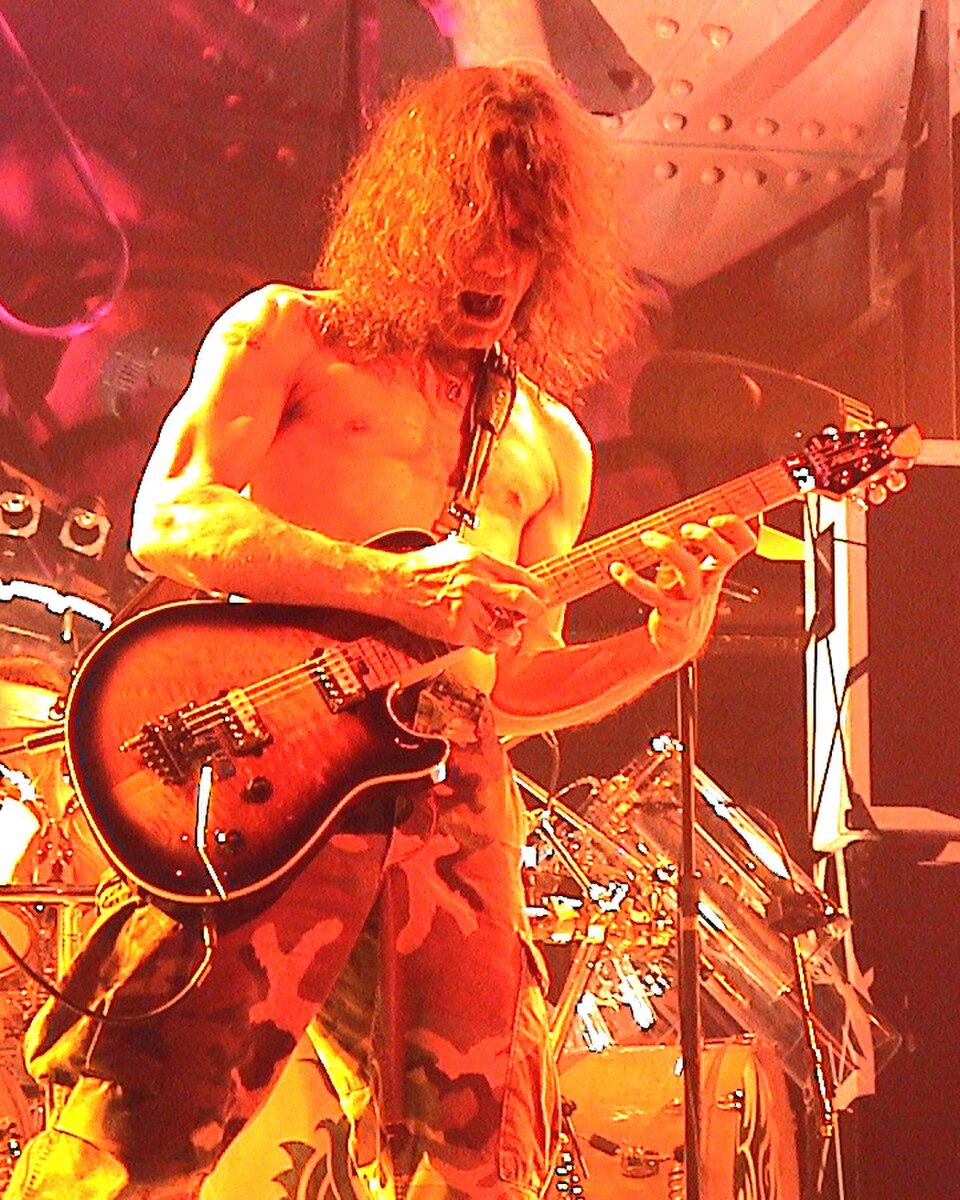
Eddie: Frankenstein guitar, MXR, Marshall mid. Alex: double-bass and ride accents. Roth: splits and spoken asides. Anthony: high stacked choruses that define the early mix. That chemistry is hard to recreate; later casts show how loud the early mix was.
04 / 06
Eruption: technique as track
Instrumental between You Really Got Me cover energy and Ain't Talkin' 'Bout Love. Dive bombs, taps, tremolo abuse—cited across 80s shred practice. Hard-rock albums rarely put a solo étude this central.
05 / 06
Jump: synth riff, still hard rock
OBX hook, Roth chorus, Eddie still solos. MTV and arenas both take it. Keys work as another riff voice inside hard rock. 1984 peak single before the singer swap.
06 / 06
Guitar standard and singer-swap case
Technique influence is permanent. Catalog debate (Roth vs Hagar) is permanent too. Guns N' Roses and 80s LA hard rock inherit the high-gain precision expectation. Chronicle value: gear method and lineup versioning under one name. Blackmore, via the Chinese edition, called Van Halen very good. The Sabbath opening slot and the Simmons/Kiss approach are the cross-band nodes in the entry.
01 / 06
Tapping as hard-rock practice standard
Pasadena hard-rock band formed in 1972. Two-handed tapping and high-gain midrange became a guitar-hero standard; the debut Van Halen (1978) is the main early citation.
Lineup versions
Roth classic
Peak1978–1985
Roth, Eddie, Anthony, Alex. Opened for Sabbath in 1978. Roth left after Jump; his next album used Steve Vai.
- David Lee RothVocals
- Eddie Van HalenGuitar
- Michael AnthonyBass
- Alex Van HalenDrums
Hagar / 5150 era
1985–1996
Hagar from Montrose; four US #1 albums, then Balance and his exit. Cherone (Extreme) sang Van Halen III. Wolfgang later took Anthony’s bass chair. Roth returned for the 2012 album.
- Sammy HagarVocals
- Eddie Van HalenGuitar, Keyboards
- Michael AnthonyBass
- Alex Van HalenDrums
Quotes
“If I can do it, anybody can.”
— Eddie Van Halen, 1980 · Guitar magazine interview excerpt
“I am not a rock star. I am a rock singer.”
— David Lee Roth, 1984 · Press interview excerpt
Scenes
| Year | Track | On stage | Tags |
|---|---|---|---|
| 1978 | EruptionTapping and harmonics showcase; guitar-hero practice reference. | Eddie Van Halen, Alex Van Halen, David Lee Roth, Michael Anthony | |
| 1984 | JumpOBX synth riff plus hard-rock chorus; MTV mass single. | Eddie Van Halen, Alex Van Halen, David Lee Roth, Michael Anthony | |
| 1986 | Why Can't This Be Love5150 opener; Hagar melodic range over Eddie keys. | Eddie Van Halen, Alex Van Halen, Sammy Hagar, Michael Anthony |