Decisive · Hard Rock, Prog & Early Metal
Rush
Toronto power trio formed in 1968. After Neil Peart joined in 1974, side-long prog suites then radio-length synth rock; Moving Pictures (1981) is the main mainstream album.

Landmark
Tom Sawyer · 1981
Synth-era prog single from Moving Pictures; rock-radio staple.
Opened
Power-trio prog with dual-duty bass/keys and a lyricist-drummer.
01 / 06
Power trio roles
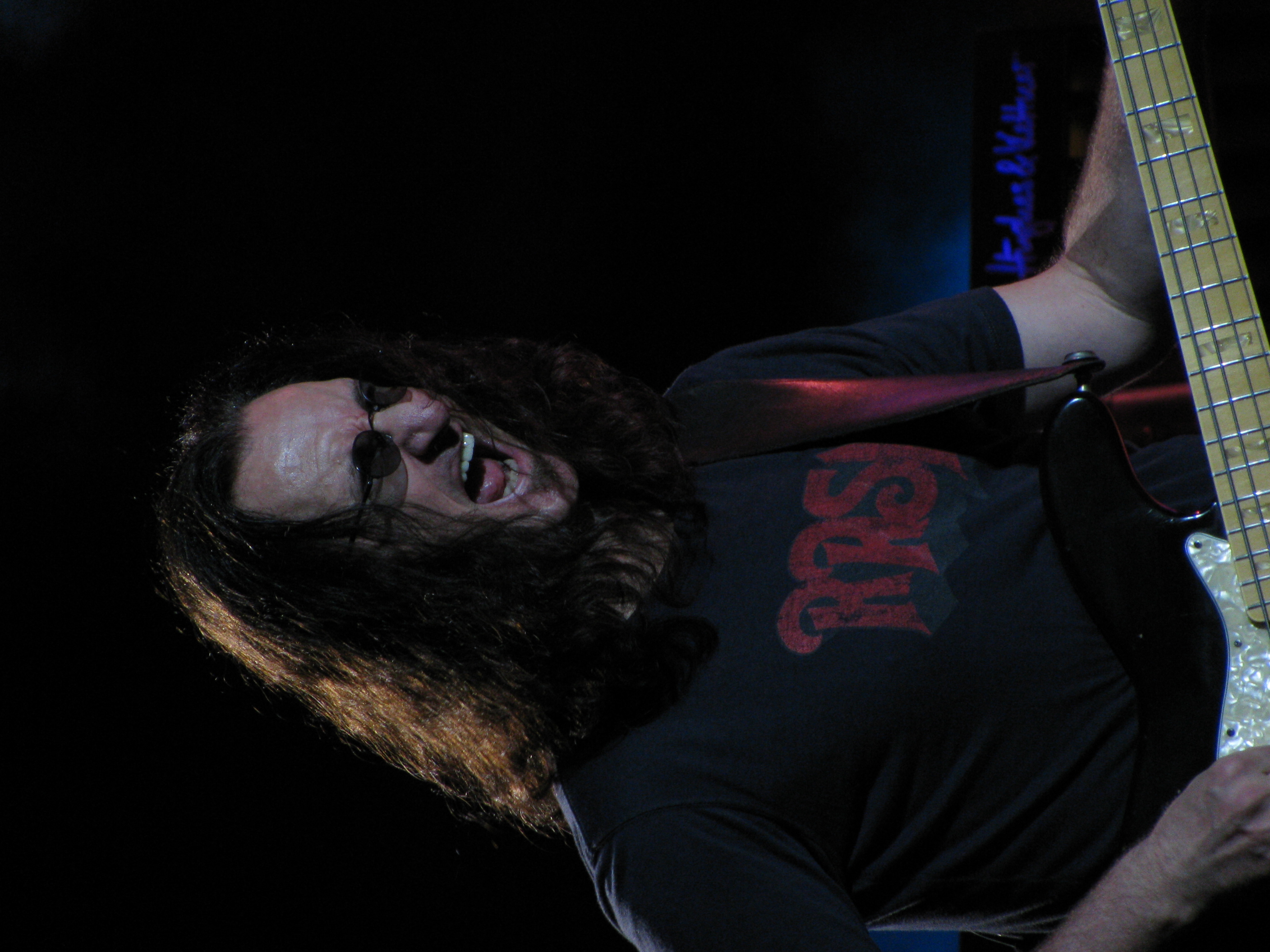
Geddy Lee covers bass, lead vocal, and keyboards. Alex Lifeson handles arrangement guitar. Neil Peart plays drums and writes lyrics. Live density is the point: complex songs kept as a three-piece. Billy Corgan later called their musical level “incomprehensible.”
02 / 06
From Rutsey to Peart; Kiss tour
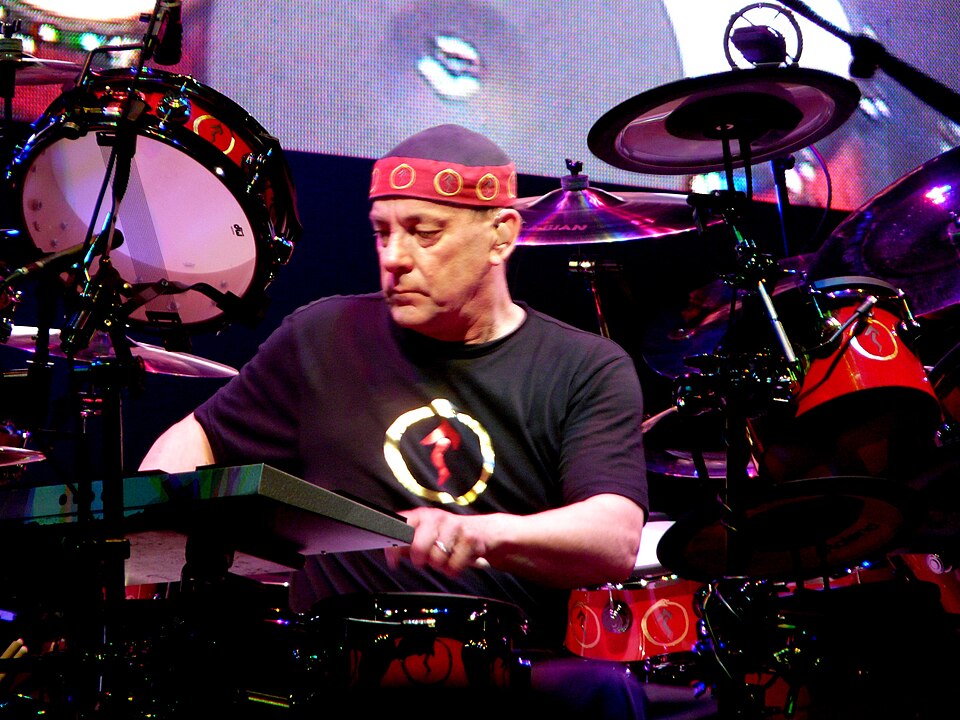
The self-titled debut (1974) is Rutsey-era hard rock; Working Man got US attention. After Rutsey left, Peart joined and Kiss took Rush on tour—Simmons had heard a “Canadian Zeppelin.” Peart’s drums and sci-fi lyrics reshape Fly by Night onward. The classic citation run is 2112 through Moving Pictures.
03 / 06
2112 to Moving Pictures
2112 and Hemispheres document side-long suites under Yes-era prog influence. Permanent Waves (1980) shortens forms; The Spirit of Radio is the radio-length single. Moving Pictures (1981) adds Tom Sawyer’s synth hook and odd meters without dropping instrumental detail—the main mainstream entry.
04 / 06
Hiatus and return
After Test for Echo, Peart lost his daughter (1997) and wife within a year and told Lee and Lifeson he was retiring. Vapor Trails (2002) brought them back; Feedback (2004) covered The Who, Neil Young, and The Yardbirds. Clockwork Angels (2012) closed the studio arc with Caravan’s ambitious opening statement.
05 / 06
Foo Fighters and YYZ
Dave Grohl, a Rush fan, once joked that girls weren’t interested in 2112. In 2008 Lee and Lifeson still sat in with Hawkins’ project at a Foo Fighters show to play instrumental YYZ. Kiss touring, Police-era writing shifts, and that Foo Fighters sit-in are the clearest cross-band links here.
06 / 06
Influence and cult scale
Lee’s line about the world’s most popular cult band fits a catalog that stayed gold for decades without fashion-cycle peaks. Tool and prog-metal acts cite odd meters; Beyond the Lighted Stage (2010) showed admirers from Reznor to Jack Black. Peart-era trio craft is the lasting reference.
01 / 06
Power trio roles
Toronto power trio formed in 1968. After Neil Peart joined in 1974, side-long prog suites then radio-length synth rock; Moving Pictures (1981) is the main mainstream album.
Lineup versions
Rutsey debut
1968–1974
Self-titled debut; hard-rock focus. Jeff Jones was bass briefly at the very start.
- Geddy LeeBass, Vocals
- Alex LifesonGuitar
- John RutseyDrums
Peart trio
Peak1974–2015
2112 through Moving Pictures and later albums; classic trio until Peart stopped touring.
- Geddy LeeBass, Vocals, Keyboards
- Alex LifesonGuitar
- Neil PeartDrums, Lyrics
Quotes
“I always like to think of us as the world's most popular cult band.”
— Geddy Lee, 2000 · Book excerpt
“When we first heard Rush… it sounded like a Canadian Zeppelin.”
— Gene Simmons, 1975 · On early Rush · Kiss connection · book excerpt
Scenes
| Year | Track | On stage | Tags |
|---|---|---|---|
| 1976 | 2112 (Overture / Temples of Syrinx)From the album 2112; side-long suite with Peart lyrics. Started a long gold-or-better US/Canada run. | Geddy Lee, Alex Lifeson, Neil Peart | |
| 1980 | The Spirit of RadioFrom Permanent Waves; radio-length single. Band cited The Police as an influence on the leaner writing. | Geddy Lee, Alex Lifeson, Neil Peart | |
| 1981 | Tom SawyerFrom Moving Pictures; synth hook, odd-meter drums, Geddy Lee high tenor. Best-known Peart-era single. | Geddy Lee, Alex Lifeson, Neil Peart |