Decisive · Punk & Post-Punk
New Order
Manchester band formed in 1980 from Joy Division’s remaining members, plus Gillian Gilbert. From Movement (1981) through Technique (1989): sequencers, drum machines, and Hook’s high bass over Sumner’s dry vocal.

01 / 06
From Joy Division to New Order
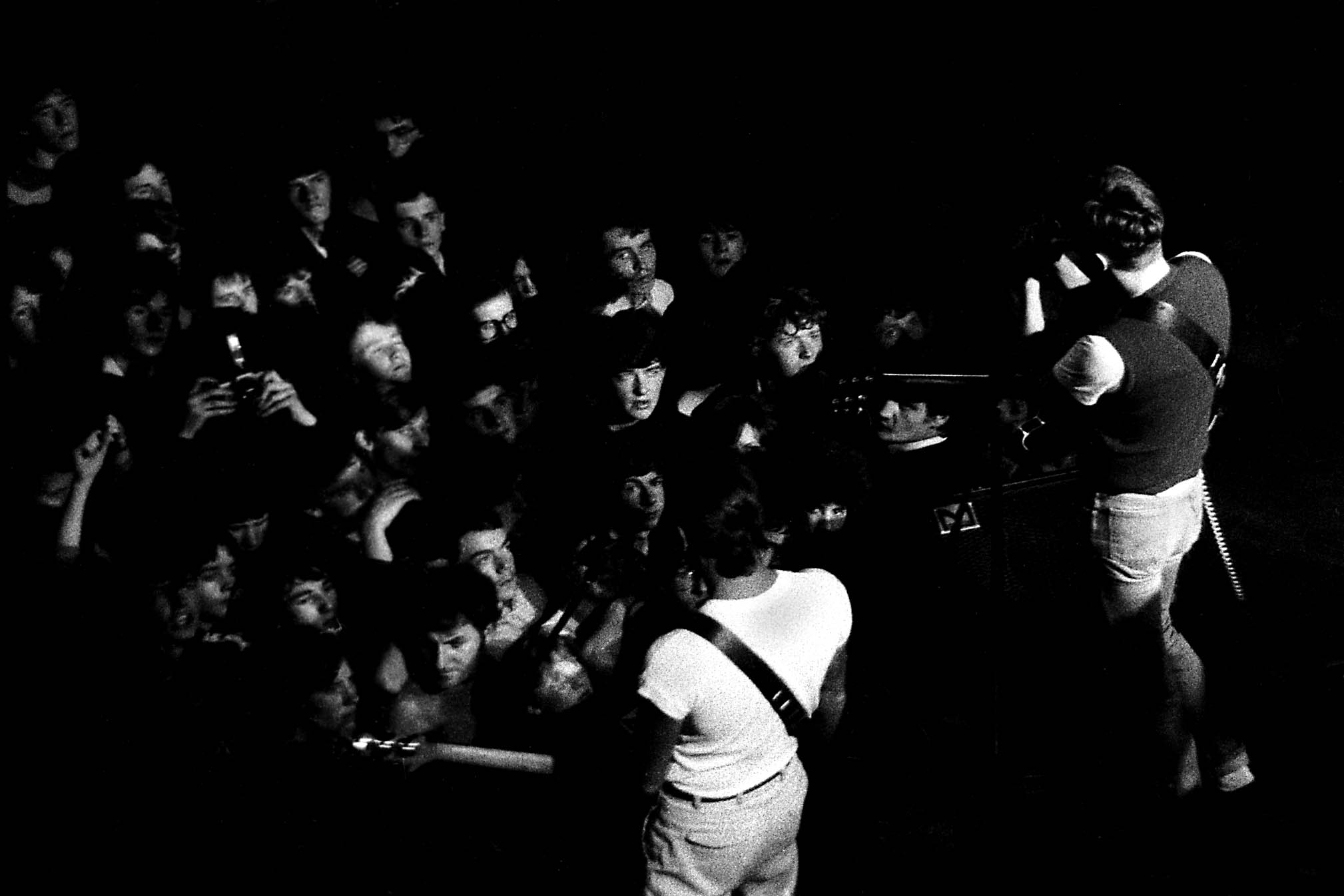
Bass often carries the melody instead of only the root. Blue Monday (1983) set a 12-inch sales mark in the UK and sits beside Joy Division’s Love Will Tear Us Apart as the catalog’s twin landmarks.
02 / 06
Blue Monday and mid-1980s albums
Blue Monday (1983) uses Oberheim DMX and sequenced bass. The Factory die-cut sleeve cost more than early single revenue. Power, Corruption & Lies includes Age of Consent and The Village—synth pads with Hook bass hooks. Low-Life (1985) and Brotherhood refine the electronic and post-punk mix for college radio.
03 / 06
Technique and Hook’s exit
Cross-band threads in the book: Marr/Smiths via Electronic; Pet Shop Boys; Kraftwerk’s Bartos; Smashing Pumpkins’ Corgan on the Get Ready return; comparison to The Doors’ post-Morrison doubt at the Joy Division → New Order handoff.
04 / 06
Ceremony
Joy Division-era lyric with new arrangement; Sumner sings. Early Factory single that links the two band names.
05 / 06
Blue Monday
Oberheim DMX, sequenced bass, Sumner vocal. Best-known club-facing track from the catalog.
06 / 06
True Faith
1987 single with programmed groove and dry Sumner vocal. Sits with the late-1980s synth-pop side of the catalog.
01 / 06
From Joy Division to New Order
Manchester band formed in 1980 from Joy Division’s remaining members, plus Gillian Gilbert. From Movement (1981) through Technique (1989): sequencers, drum machines, and Hook’s high bass over Sumner’s dry vocal.
Lineup versions
Classic four
1980–2001
Movement (1981) then Temptation / Blue Monday. Power, Corruption & Lies through Technique. Hook → Revenge; Gilbert/Morris → The Other Two; Sumner + Marr → Electronic (also worked with Pet Shop Boys and Kraftwerk’s Karl Bartos).
- Bernard SumnerVocals, Guitar
- Peter HookBass
- Stephen MorrisDrums
- Gillian GilbertKeys
Without Hook
2011–present
Phil Cunningham (ex-Marion) replaced Gilbert for Get Ready-era work with Billy Corgan’s support; Hook left; 2011 return without Hook, Gilbert back, Chapman on bass.
- Bernard SumnerVocals, Guitar
- Stephen MorrisDrums
- Gillian GilbertKeys
- Phil CunninghamGuitar, Keys
- Tom ChapmanBass
Quotes
“After Joy Division we had to dance or die.”
— Bernard Sumner, 1983 · Press interview excerpt
“Blue Monday was a machine we barely understood—and it worked.”
— Stephen Morris, 1988 · Archive interview excerpt
Scenes
| Year | Track | On stage | Tags |
|---|---|---|---|
| 1981 | CeremonyCurtis lyric with new music; early New Order single continuity from Joy Division. | Bernard Sumner, Peter Hook, Stephen Morris, Gillian Gilbert | |
| 1983 | Blue MondayOberheim DMX and sequenced bass; major 12-inch seller. | Bernard Sumner, Peter Hook, Stephen Morris, Gillian Gilbert | |
| 1987 | True Faith1987 single; dry Sumner vocal over programmed groove; linked to the Technique period. | Bernard Sumner, Peter Hook, Stephen Morris, Gillian Gilbert |