Decisive · Metal Branches
Motörhead
Lemmy’s power trio between punk tempo and metal volume. Ace of Spades (1980) fixed speed and attitude as a shared reference for both scenes.

Landmark
Ace of Spades · 1980
Gambling riff and Lemmy bark as Motörhead’s permanent ID.
Opened
Bass as rhythm guitar; volume as the central stance.
01 / 06
Hawkwind exit to Motörhead
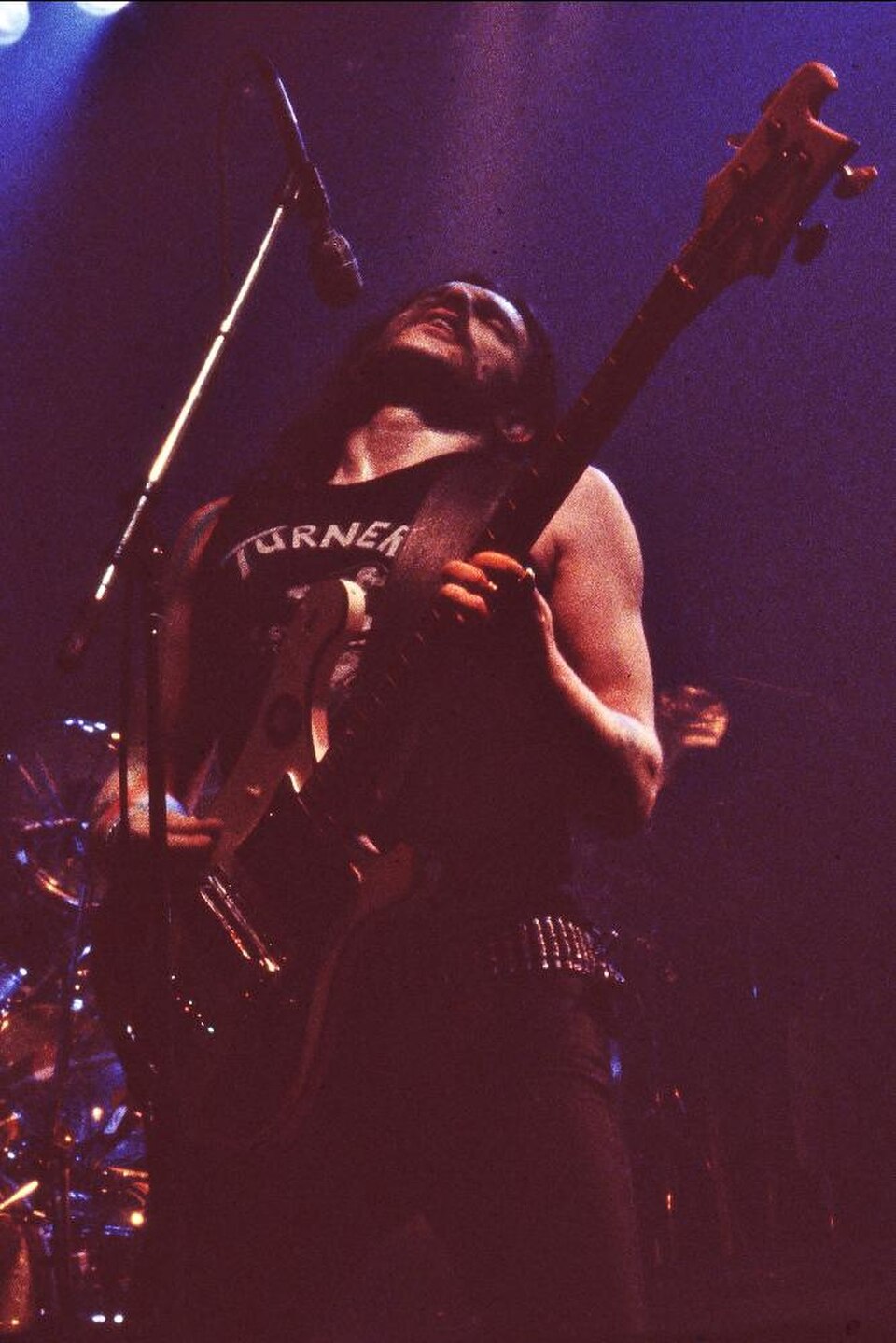
Lemmy forms Bastard, renamed Motörhead after a Hawkwind song. Debut and Overkill (1979) establish the power trio: Lemmy's Rickenbacker bass through Marshall, Clarke's blues-rock guitar, Taylor's double-kick. No fancy solos—song length stays under four minutes. Punk clubs and metal audiences both claim the band. Lemmy's vocal is shouted conversation, not operatic metal.
02 / 06
Ace of Spades peak
Ace of Spades (1980) title track opens on Lemmy's bass riff—E minor gallop at about 140 BPM. Clarke's guitar doubles the root; no keyboard pad. The album mixes fast cuts (Ace of Spades, Shoot You in the Back) and slower ones (Live to Win, Leave Me Alone)—dynamic range inside speed metal. No Sleep 'til Hammersmith (1981) becomes the live performance reference.
03 / 06
Lineup changes and thrash debt
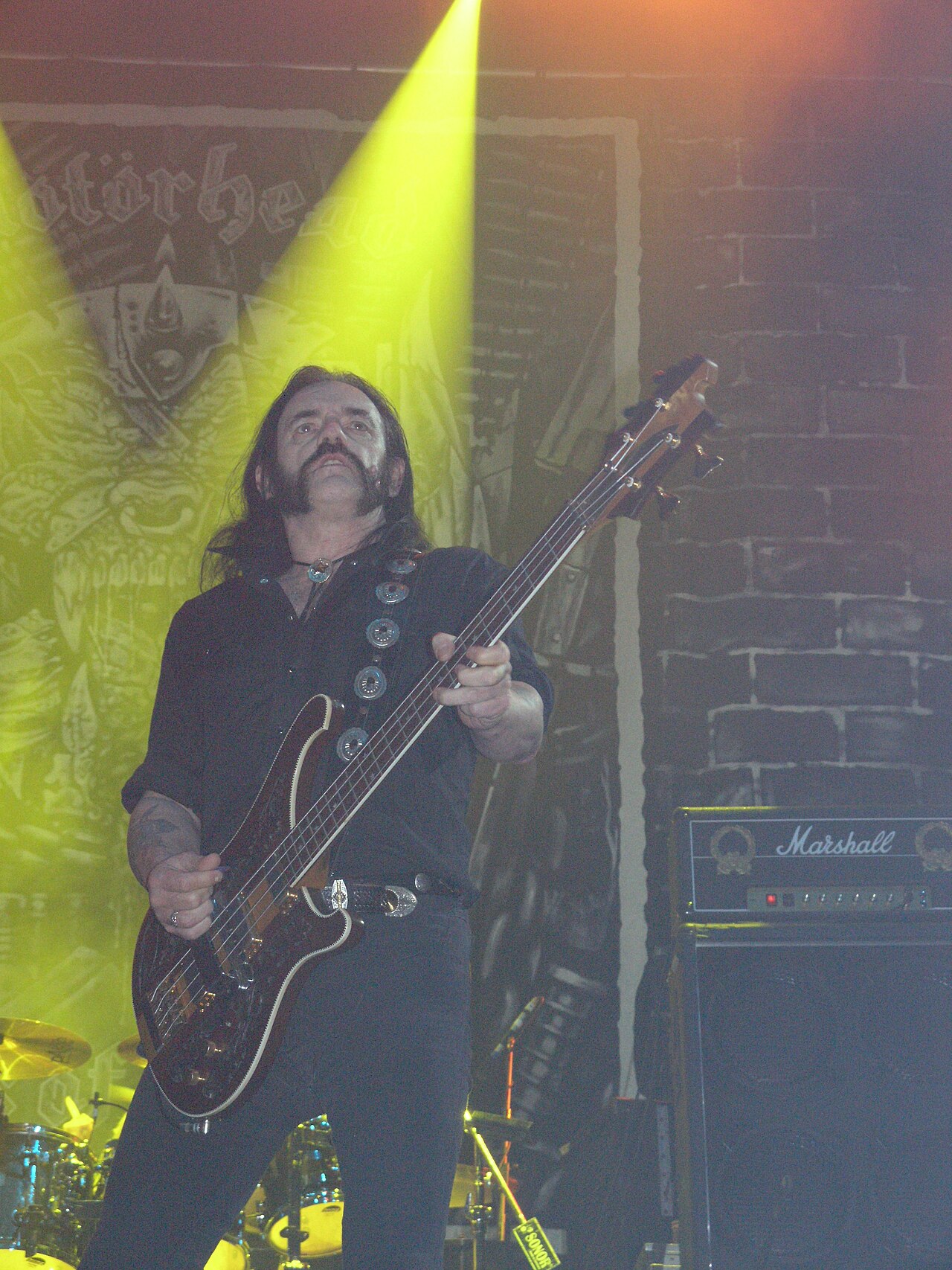
Clarke exits in 1982; Phil Campbell joins for a two-guitar era. Iron Fist and Killed by Death extend the speed approach. Metallica, Slayer, and Anthrax cite Motörhead for tempo and attitude—not riff complexity. Lemmy runs the band until his death in 2015; four decades of live reliability is a secondary legacy.
04 / 06
Overkill
Double-kick opener—tempo as identity before thrash codified.
05 / 06
Ace of Spades
Three-chord velocity reference—Lemmy bass as rhythm guitar in the mix.
06 / 06
Bomber
Siren intro and mid-tempo stomp; stage bomber set as visual production.
01 / 06
Hawkwind exit to Motörhead
Lemmy’s power trio between punk tempo and metal volume. Ace of Spades (1980) fixed speed and attitude as a shared reference for both scenes.
Lineup versions
Classic three: Lemmy / Fast Eddie / Philthy
Peak1976–1982
Clarke / Taylor trio through Hammersmith. Later book chairs: Robertson (Thin Lizzy), Gill (Saxon), Campbell, Würzel, then Dee. Trio again after Würzel left in 1995.
- Lemmy KilmisterBass, Vocals
- Fast Eddie ClarkeGuitar
- Phil TaylorDrums
Quotes
“We are Motörhead. And we play rock and roll.”
— Lemmy Kilmister, 1980 · Stage / press credo · quote wall
“If it has a Motörhead sticker, it goes faster.”
— Lemmy Kilmister, 1995 · Press interview excerpt
Scenes
| Year | Track | On stage | Tags |
|---|---|---|---|
| 1979 | OverkillDouble-kick opener—tempo as identity before thrash codified. | Lemmy Kilmister, Fast Eddie Clarke, Phil Taylor | |
| 1980 | Ace of SpadesThree-chord velocity reference—Lemmy bass as rhythm guitar in the mix. | Lemmy Kilmister, Fast Eddie Clarke, Phil Taylor | |
| 1980 | BomberSiren intro and mid-tempo stomp; stage bomber set as visual production. | Lemmy Kilmister, Fast Eddie Clarke, Phil Taylor |