Decisive · Metal Branches
Judas Priest
Birmingham metal band formed in 1969. Halford’s leather-and-studs image and Tipton/Downing twin-guitar attack define a classic metal look and sound; British Steel (1980) and Painkiller (1990) bookend the peak years.

Landmark
Breaking the Law · 1980
Short-riff metal single that fixed Priest’s radio face.
Opened
Leather look plus twin guitar as a portable metal package.
01 / 06
Twin guitar and leather metal look
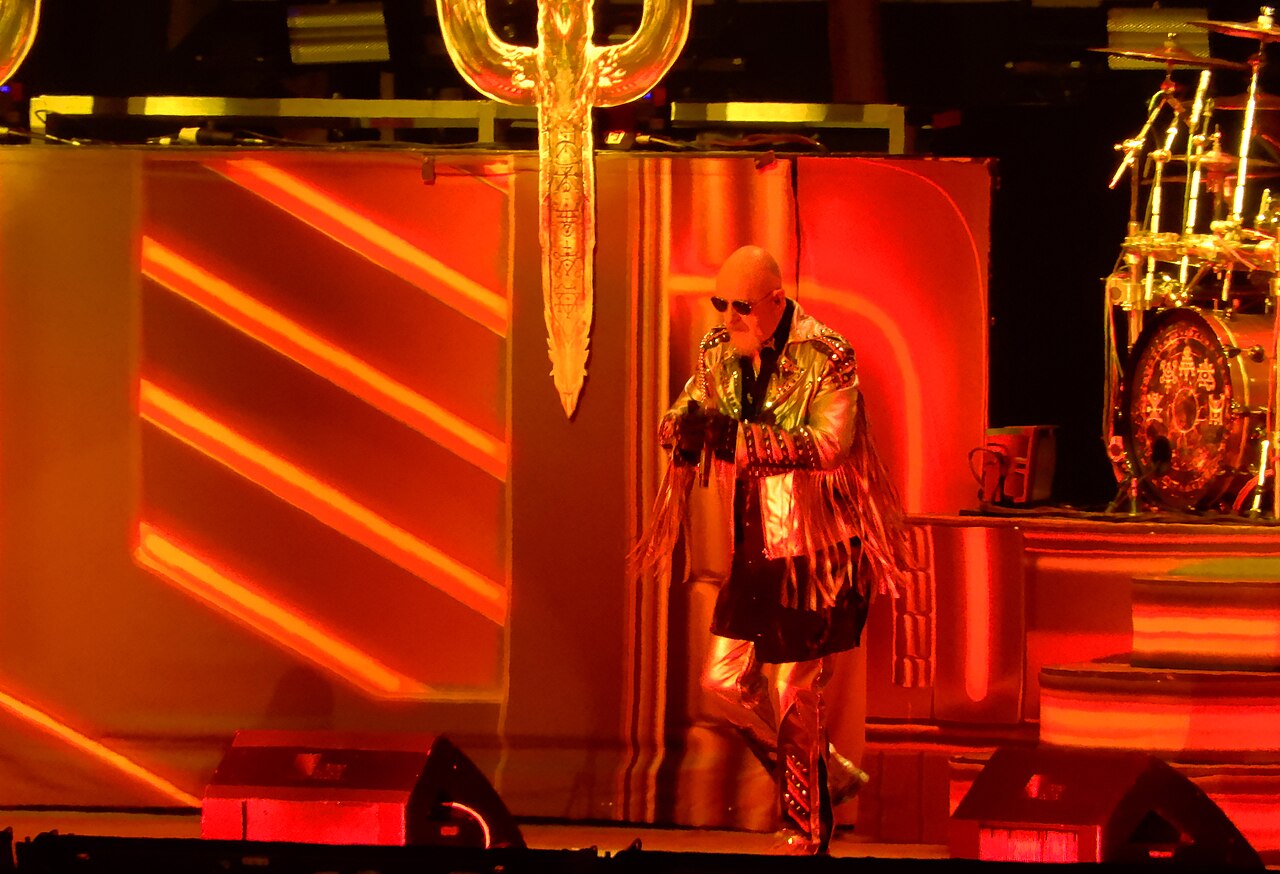
Priest establish harmony leads, studs image, and motorcycle stage entry as a portable metal package. Birmingham neighbors Black Sabbath; Priest choose speed and polish over doom crawl. Maiden and US metal both read this twin-guitar and image approach.
02 / 06
Halford classic as peak
Peak: Halford / Tipton / Downing / Hill, later with Travis. The Ripper Owens 1990s chapter sits between Halford eras. Halford returns in 2003. Chronicle peak = leather Halford twin-guitar years through Painkiller.
03 / 06
Operatic highs, dual leads, steady bass
Halford: wide vibrato and scream highs. Tipton/Downing: traded solos and harmony thirds. Hill: steady eighths. Travis: double-bass upgrade from 1989. Image and arrangement travel together.
04 / 06
Breaking the Law: short-riff radio
British Steel. Two-minute crime riff, gang vocal hook. Metal without epic runtime. Entry for listeners before Painkiller speed.
05 / 06
Painkiller: speed-metal peak
Travis intro, Halford top notes, dense twin-guitar leads. 1990 statement after 80s polish. Late classic peak track.
06 / 06
Metal look and twin-lead writing
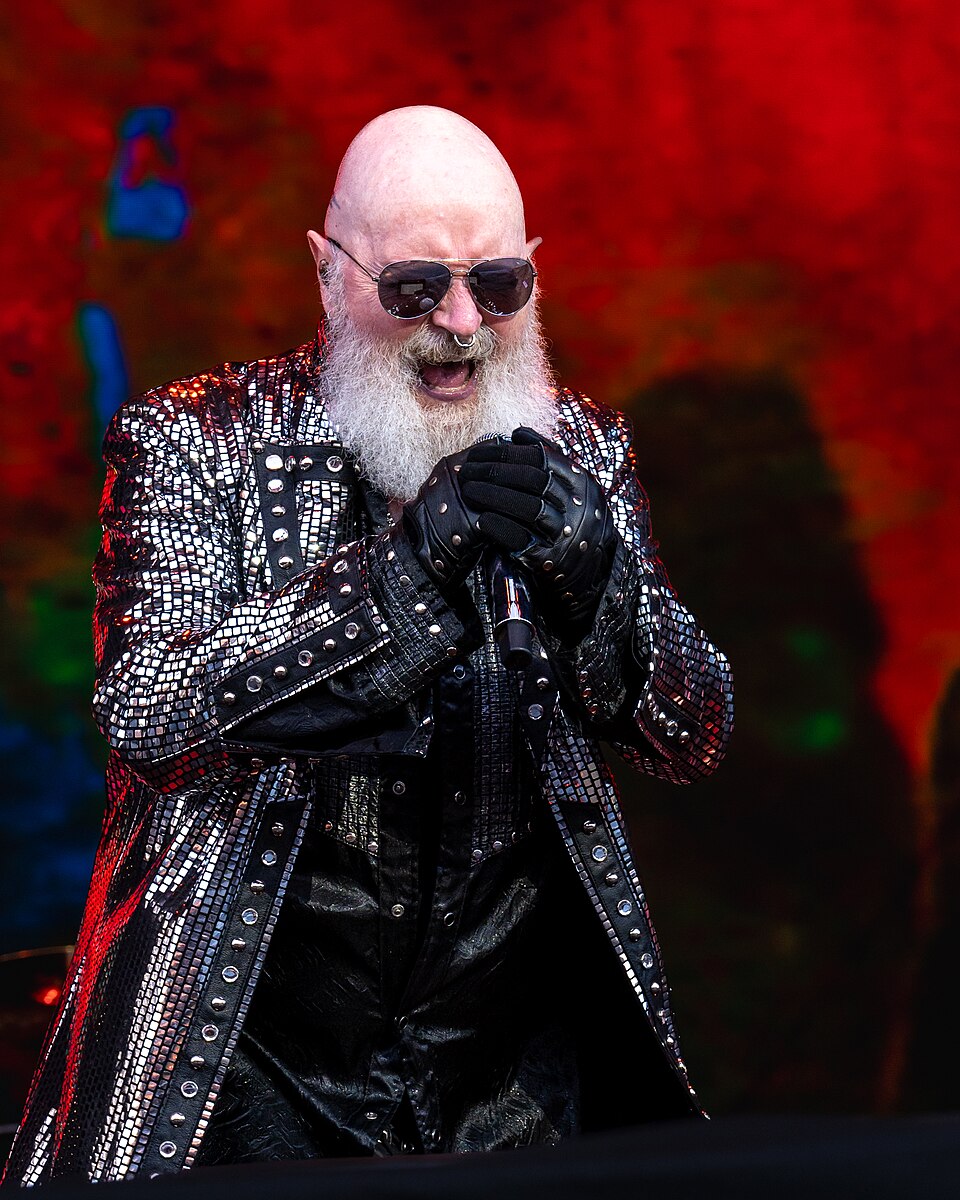
Leather look and twin-lead writing feed Maiden, Megadeth, and arena metal. Birmingham metal map: Sabbath doom, Priest speed and image. Halford’s voice remains the main citation. K.K. Downing to Kerrang! in 1987, via the Chinese edition: what they wanted long-term was to be treated as leaders of the music they played, heavy metal.
01 / 06
Twin guitar and leather metal look
Birmingham metal band formed in 1969. Halford’s leather-and-studs image and Tipton/Downing twin-guitar attack define a classic metal look and sound; British Steel (1980) and Painkiller (1990) bookend the peak years.
Lineup versions
Halford classic / Painkiller
Peak1980–1990
Halford from 1973, Tipton from 1974. Glover/Phillips on Sin After Sin. Travis from Painkiller (1990). Faulkner replaced Downing in 2011.
- Rob HalfordVocals
- Glenn TiptonGuitar
- K.K. DowningGuitar
- Ian HillBass
- Scott TravisDrums
Owens years
1996–2003
Owens came from a tribute band after Halford left for Fight in 1992. The book sets this next to Dickinson leaving Maiden: both bands sold less without the singer.
- Tim "Ripper" OwensVocals
- K. K. DowningGuitar
- Glenn TiptonGuitar
- Ian HillBass
- Scott TravisDrums
Quotes
“Leather and studs became the uniform because it looked like the music sounded.”
— Rob Halford, 1984 · Press interview excerpt
“Twin leads are the grammar. Everything else is dialect.”
— Glenn Tipton, 1980 · Guitar interview excerpt
“What we want in the long run is to be treated as leaders of the music we play — heavy metal. (Chinese-edition wording.)”
— K.K. Downing, 1987 · Kerrang!, via 《摇滚编年史》
Scenes
| Year | Track | On stage | Tags |
|---|---|---|---|
| 1980 | Breaking the LawBritish Steel short-riff single; twin-guitar hooks. | Rob Halford, Glenn Tipton, K.K. Downing, Ian Hill | |
| 1990 | PainkillerTravis double-bass and Halford highs; speed-metal peak track. | Rob Halford, Glenn Tipton, K.K. Downing, Ian Hill, Scott Travis | |
| 1982 | You've Got Another Thing Comin'US radio metal hit; Screaming for Vengeance era. | Rob Halford, Glenn Tipton, K.K. Downing, Ian Hill |