Decisive · Hard Rock, Prog & Early Metal
Deep Purple
Began as Roundabout in 1967–68, then Deep Purple. Mark II (Blackmore / Gillan / Glover / Lord / Paice) set Hammond organ equal to guitar on In Rock and Machine Head; Blackmore left in 1975 to form Rainbow, later rejoining the Mk II reunion.

Landmark
Smoke on the Water · 1972
Open-fifth riff; among the most widely learned guitar figures.
Opened
Hammond equal to guitar in the hard-rock mix; Blackmore’s Rainbow exit and Gillan/Hughes Sabbath years cross-link the catalogs.
01 / 05
Organ and riff together
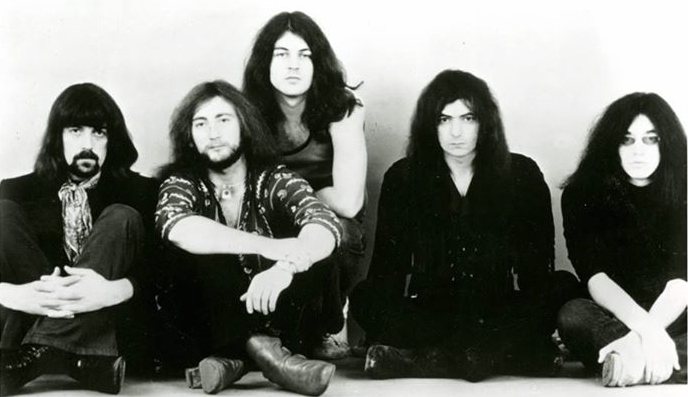
Mark II sets hard rock with Lord’s Hammond equal to Blackmore’s guitar in the live mix—more organ-forward than Led Zeppelin or Black Sabbath. Machine Head (1972) and Made in Japan are the main studio and live documents. Metallica, Def Leppard, and Dream Theater have cited the live album; Dream Theater covered its full set in 2006. Unlike peers who dropped singles, Purple kept Black Night and Strange Kind of Woman as UK Top 10 singles.
02 / 05
Mark I / II / III and Rainbow exit
Mark I: Evans/Simper psychedelic–hard mix and Hush. Mark II: Gillan/Glover peak—In Rock through Made in Japan. Mark III: Coverdale/Hughes on Burn and Stormbringer. Blackmore exits mid-1975 to form Rainbow after disputes over musical direction. Ian Paice remains the continuous drum seat across marks. Gillan later joins Black Sabbath for Born Again; Hughes sings on Sabbath’s Seventh Star—shared Purple↔Sabbath thread.
03 / 05
Smoke on the Water
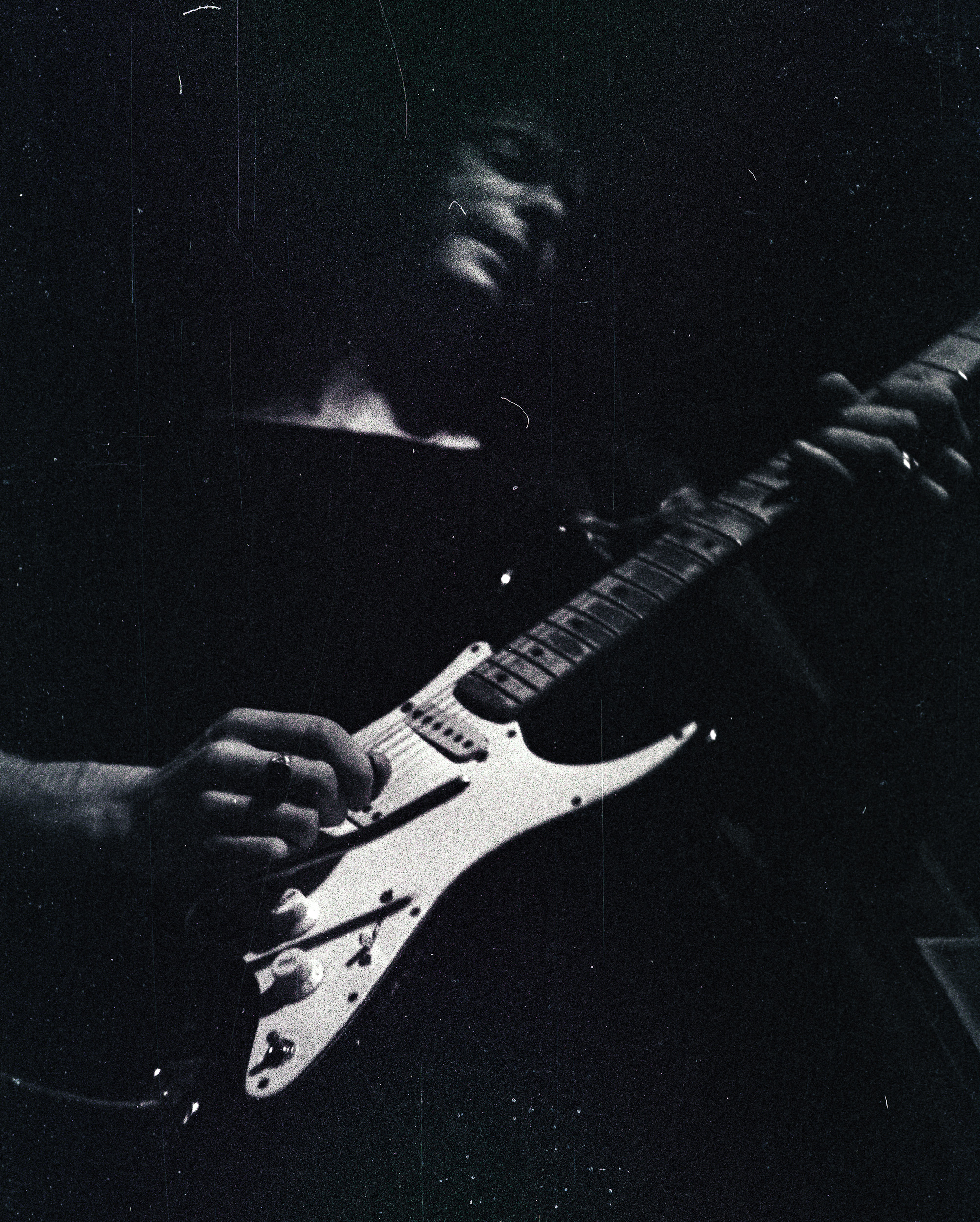
Open-fifth figure over Lord’s organ and Paice’s pocket. The lyric documents the Montreux casino fire during the Machine Head sessions. It became one of the first riffs many guitarists learn worldwide. Highway Star on the same album shows the speed and neoclassical lead side.
04 / 05
Perfect Strangers and later seats
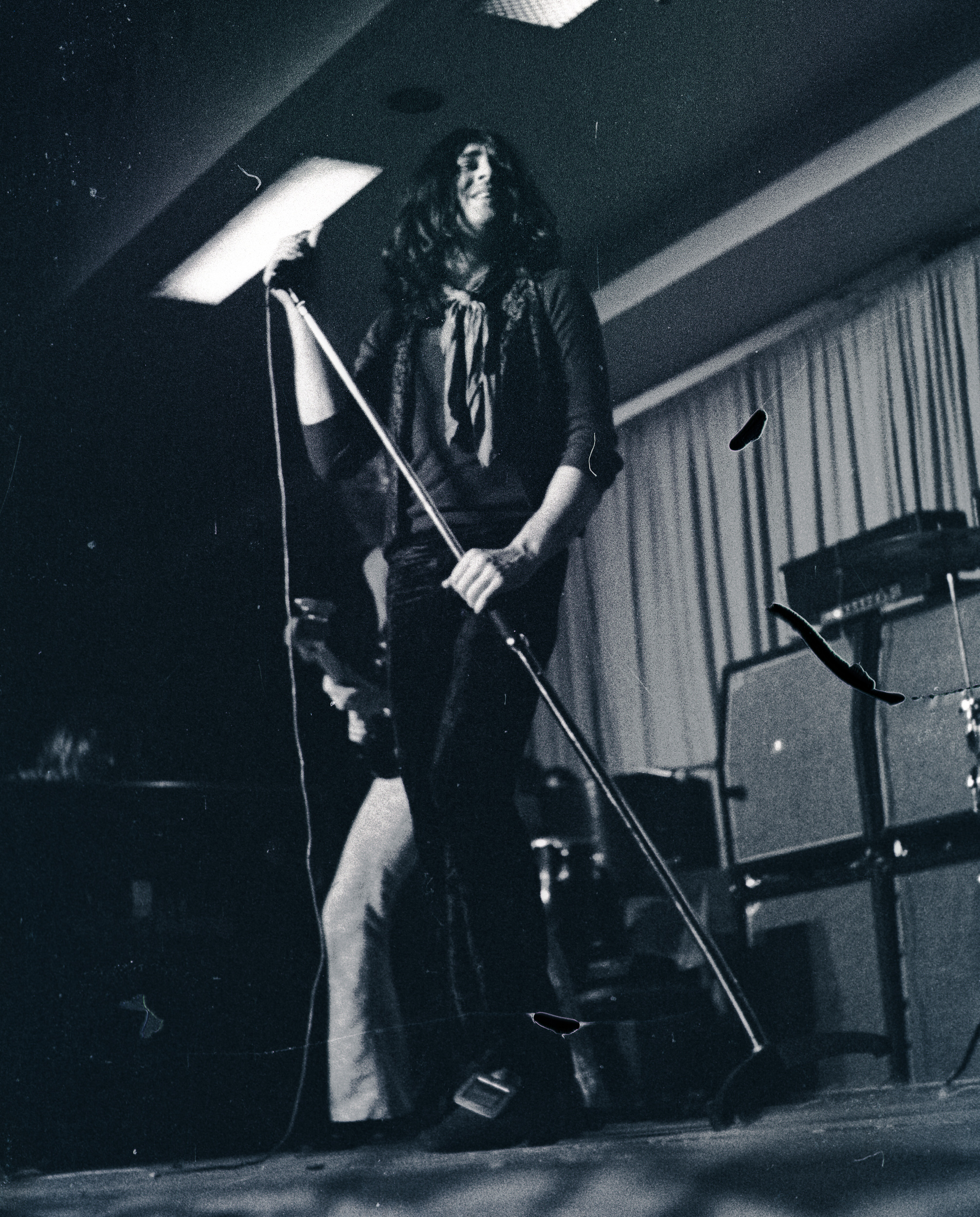
1984 Mark II reunion: Paice, Lord, Blackmore, Glover, Gillan—Perfect Strangers goes platinum. The House of Blue Light (1987) sits between styles; Gillan and Blackmore clash again. Slaves and Masters (1990) uses Joe Lynn Turner (ex-Rainbow) on vocals. Gillan returns for The Battle Rages On… (1993); Blackmore exits before Purpendicular (1996). Joe Satriani tours, then Steve Morse records Abandon (1998). Don Airey (ex-Rainbow) replaces Lord in 2002.
05 / 05
NWOBHM, Rainbow, Sabbath
Iron Maiden and later metal acts cite the riff-plus-organ weight and Gillan-range vocals. Rainbow continues Blackmore’s neoclassical lead path with Dio, then Bonnet and Turner. Gillan and Hughes’ Sabbath years keep Purple tied to that Birmingham catalog. Smoke on the Water remains a common first riff for guitar students.
01 / 05
Organ and riff together
Began as Roundabout in 1967–68, then Deep Purple. Mark II (Blackmore / Gillan / Glover / Lord / Paice) set Hammond organ equal to guitar on In Rock and Machine Head; Blackmore left in 1975 to form Rainbow, later rejoining the Mk II reunion.
Listen
Lineup versions
Mark I
1968–1969
Roundabout → Deep Purple. Hush / Shades era before Gillan/Glover.
- Ritchie BlackmoreGuitar
- Rod EvansVocals
- Jon LordKeyboards
- Nick SimperBass
- Ian PaiceDrums
Mark II
Peak1969–1973; 1984–1989; 1992–1993
In Rock / Machine Head / Made in Japan; Perfect Strangers reunion.
- Ritchie BlackmoreGuitar
- Ian GillanVocals
- Jon LordKeyboards
- Roger GloverBass
- Ian PaiceDrums
Mark III
1973–1975
Burn / Stormbringer; Blackmore exits 1975 to Rainbow.
- Ritchie BlackmoreGuitar
- David CoverdaleVocals
- Jon LordKeyboards
- Glenn HughesBass, Vocals
- Ian PaiceDrums
Turner / Slaves and Masters
1989–1992
Joe Lynn Turner from Rainbow on vocals after Gillan exits again.
- Ritchie BlackmoreGuitar
- Joe Lynn TurnerVocals
- Jon LordKeyboards
- Roger GloverBass
- Ian PaiceDrums
Quotes
“I don't like to be predictable.”
— Ritchie Blackmore, 1975 · Interview excerpt · quote wall
“The organ was as loud as the guitar.”
— Jon Lord, 1972 · On early Purple live mix · press
“Nostalgia is fine, as long as you're not obsessed with the past.”
— Roger Glover, 2012 · Kerrang! interview
Scenes
| Year | Track | On stage | Tags |
|---|---|---|---|
| 1968 | HushJoe South cover; US Top 5 single that pushed Shades of Deep Purple onto the Billboard chart. | Ritchie Blackmore, Rod Evans, Jon Lord, Nick Simper, Ian Paice | |
| 1972 | Smoke on the WaterOpen-fifth riff from Machine Head; lyric about the Montreux casino fire. First US gold album for the band. | Ritchie Blackmore, Ian Gillan, Jon Lord, Roger Glover, Ian Paice | |
| 1972 | Highway StarUK #1 single from Machine Head; Blackmore classical figures trade with Lord’s Hammond. | Ritchie Blackmore, Ian Gillan, Jon Lord, Roger Glover, Ian Paice | |
| 1970 | Child in TimeFrom Deep Purple in Rock (UK Top 5). Gillan scream over Lord’s organ bed; Blackmore-led hard-rock turn after Concerto for Group and Orchestra. | Ritchie Blackmore, Ian Gillan, Jon Lord, Roger Glover, Ian Paice |