Decisive · Britpop & UK Indie
Blur
Colchester/London Britpop band formed in 1988. Parklife (1994) and The Great Escape (1995) put observational English pop on UK charts; later albums 13 and Think Tank moved toward art-rock and electronic textures.

Landmark
Parklife · 1994
Key 1994 single; observational English pop on UK radio.
Opened
Character pop and Coxon guitar texture across Britpop and later art-rock records.
01 / 06
Observational Britpop
Parklife (1994) centers on English everyday detail, character voices, and clear verse/chorus shapes. Albarn writes roles; Coxon plays noise and short guitar figures rather than long solos. The mid-90s UK press paired Blur with Oasis on the charts. Arrangement and lyric method are the musical facts.
02 / 06
Classic four and Think Tank
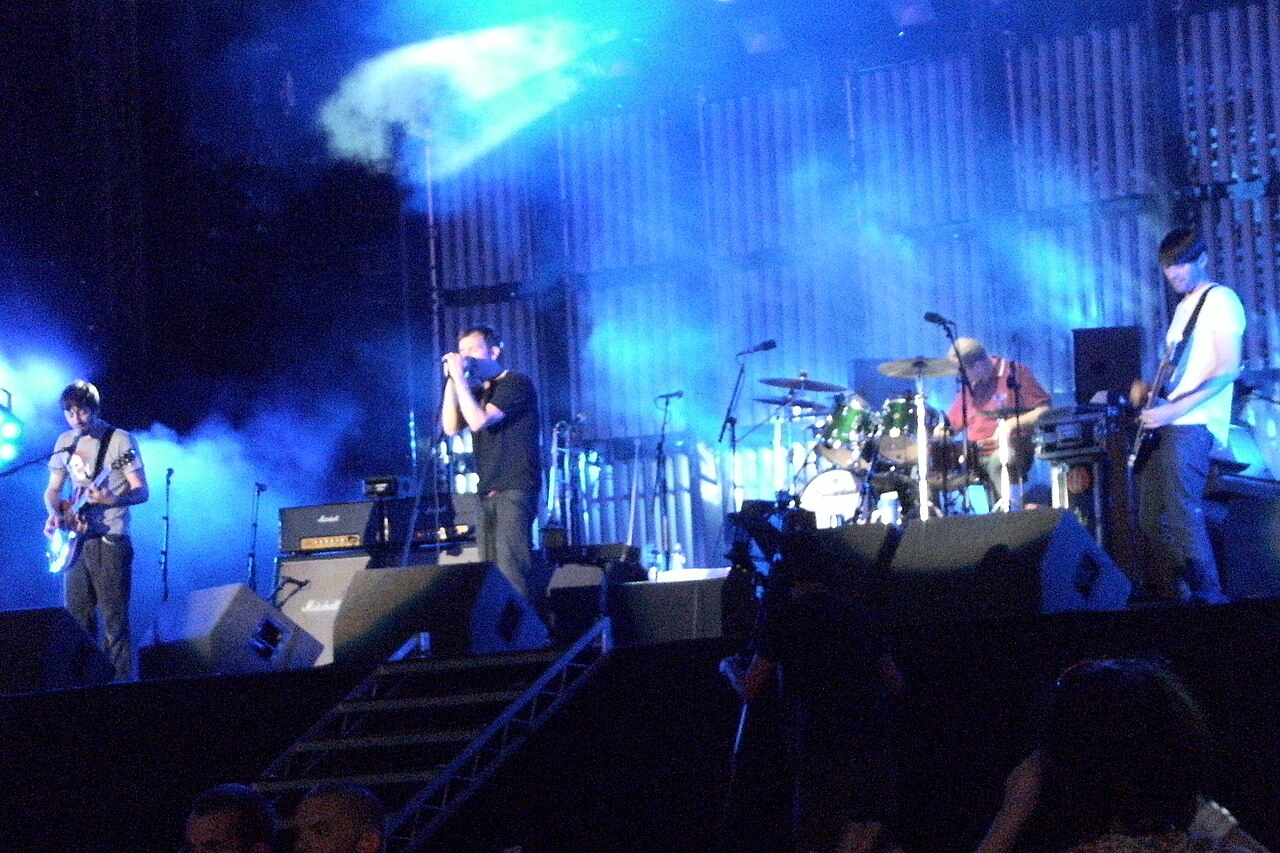
Damon Albarn, Graham Coxon, Alex James, and Dave Rowntree are the best-known lineup from Modern Life Is Rubbish through 13. Coxon left before Think Tank (2003). Electronic parts and guests covered the guitar role. Reunions from 2009 onward restore the four-piece. The only chair change in the entry is Coxon’s 2002 exit and 2009 return. Tong covers the gap, shared with The Verve.
03 / 06
Parklife and Girls & Boys
Girls & Boys opens the Parklife cycle with disco-leaning bass and an observational chorus. The title track Parklife uses spoken-sung verses and brass. Both singles are central to the 1994 UK chart run.
04 / 06
Song 2
Song 2 (1997) is about two minutes: quiet verse, loud chorus, Coxon distortion, Albarn’s woo-hoo hook. It became the band’s main US radio entry. Coffee & TV on 13 (1999) shows Coxon taking a melodic lead vocal.
05 / 06
Albarn and Coxon methods
Albarn’s interviews stress character and pop presentation. Coxon has described wanting guitars that sound unstable—noise and texture over flashy solos. Outside Blur, Albarn developed Gorillaz as a separate project.
06 / 06
Later UK indie references
Later UK indie bands often cite Coxon’s guitar vocabulary and Albarn’s character-led lyrics. Arctic Monkeys are among acts linked to observational songwriting habits. Think Tank remains the main electronic-leaning Blur album after Coxon’s exit.
01 / 06
Observational Britpop
Colchester/London Britpop band formed in 1988. Parklife (1994) and The Great Escape (1995) put observational English pop on UK charts; later albums 13 and Think Tank moved toward art-rock and electronic textures.
Lineup versions
Classic Britpop four
Peak1993–2002
Modern Life Is Rubbish through 13; Coxon on guitar throughout.
- Damon AlbarnVocals, Keys
- Graham CoxonGuitar
- Alex JamesBass
- Dave RowntreeDrums
Think Tank (Coxon-less)
2002–2003
Coxon exits; Think Tank leans electronic and art-rock. Coxon was out for the Think Tank tour. Simon Tong, ex-Verve, played guitar, then stayed with Gorillaz and The Good, the Bad & the Queen.
- Damon AlbarnVocals, Keys
- Alex JamesBass
- Dave RowntreeDrums
Quotes
“If you wake up in the morning and you feel like a pop star, then you're a pop star.”
— Damon Albarn, 1995 · Press excerpt · quote wall
“I wanted the guitars to sound like they were falling apart.”
— Graham Coxon, 1997 · On guitar texture · interview
Scenes
| Year | Track | On stage | Tags |
|---|---|---|---|
| 1994 | ParklifeTitle track from Parklife; spoken-sung verses, brass color, jaunty chord pattern. | Damon Albarn, Graham Coxon, Alex James, Dave Rowntree | |
| 1997 | Song 2Two-minute loud/quiet single from Blur; Coxon crunch guitar, Albarn “woo-hoo” hook; US radio hit. | Damon Albarn, Graham Coxon, Alex James, Dave Rowntree | |
| 2003 | Out of TimeThink Tank era without Coxon; electronic and guest textures around Albarn’s vocal. | Damon Albarn, Alex James, Dave Rowntree |